
Horse Mental Health: Is Your Horse Happy? Signs and Solutions
Reviewed by Dr. Ali Ehtisham, DVM
We have become much better at understanding horse physical health over the past few decades. Laminitis, gastric ulcers, joint disease, and infectious conditions are managed with growing sophistication. But equine mental health — stress, boredom, chronic frustration, learned helplessness, and grief — remains a frontier we are only beginning to address seriously. The science is there. The management frameworks are less developed. This guide brings together what we know about horse psychological wellbeing and what you can do about it.
Do Horses Have Mental Health?
Yes — the scientific evidence is clear on this point. Horses are sentient animals with complex emotional lives, the ability to form long-term social bonds, the capacity to experience positive and negative emotional states, and the capacity to suffer psychologically as well as physically.
Equine cognition research has documented that horses can recognise individual humans by face and voice, remember human emotional expressions and modify their behaviour accordingly, learn complex tasks using reasoning rather than just trial and error, demonstrate anticipatory emotional states (excitement or apprehension in response to upcoming events), and show something functionally equivalent to grief when they lose a bonded companion. Horses form genuine social hierarchies with preferential relationships — they have friends, and the loss of those friends causes measurable stress responses.
The physiological architecture of horse emotion is well documented: cortisol as a stress hormone, heart rate variability as a measure of autonomic stress, glucocorticoid receptor expression changes in chronically stressed horses, and immune function changes associated with psychological stress. These are not metaphors or anthropomorphisms — they are measurable biological parameters that change systematically in response to management conditions.
What this means practically is that a horse's psychological experience is a legitimate welfare consideration that must be part of how we manage them, not a sentimental extra that can be ignored when practical convenience conflicts with it.
Signs of a Happy Horse
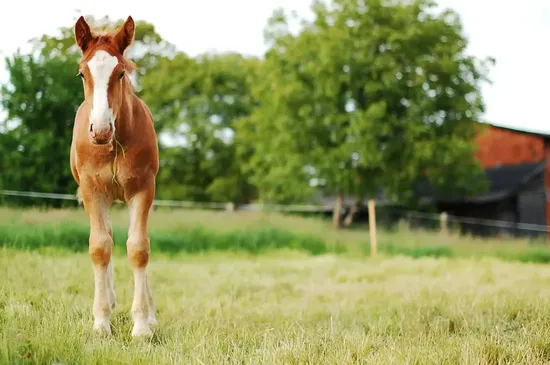
Relaxed posture. A happy, relaxed horse shows a characteristic soft posture: head carried at a comfortable height (not low and drooping, not high and tense), muscles across the neck, back, and quarters without excessive tension, and a general ease of carriage when standing or moving. Resting one hind leg — the classic "cocked hip" stance — indicates genuine relaxation and absence of pain.
Soft, quiet eye. The eyes of a relaxed horse are soft and calm, without the wide white "stress crescent" that appears around the eye during fear or arousal. A horse with a soft, half-lidded gaze and minimal tension in the muscles around the eye is in a comfortable emotional state.
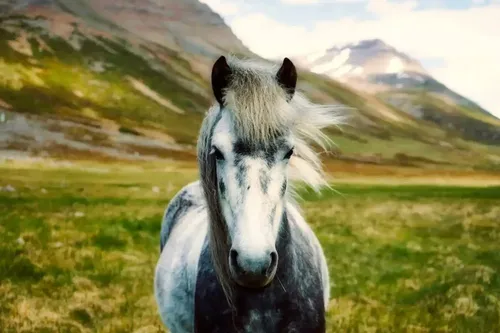
Ears in neutral or showing interested curiosity. Ears held loosely to the sides in a floppy-neutral position indicate relaxation. Ears pricked forward with alert, interested body language indicate positive engagement and curiosity. Ears pinned flat against the head indicate aggression or pain; ears held stiffly back indicate stress or fear.
Good appetite and interest in food. A horse that eats enthusiastically, investigates new feeds, and shows normal food-motivated behaviour is displaying a positive baseline. Loss of appetite in a horse that previously ate well is always a welfare flag requiring investigation.
Interest in surroundings and other horses. An emotionally healthy horse is engaged with their environment — moving around their field with apparent purpose, investigating new objects, interacting socially with other horses through mutual grooming, play, or simply standing in proximity.
Playful behaviour. Play in adult horses — particularly in younger adults but documented across all age groups — is a positive welfare indicator. Bucking, rearing, chasing, mutual games, and object play all indicate positive emotional state. The absence of any play in a horse that previously played is a welfare concern worth noting.
Willing engagement with handler. A horse that approaches their handler willingly, stands quietly for grooming and tacking up without coercion, and engages with work without persistent evasion or resistance is demonstrating positive emotional associations with human interaction. This is not the same as passive compliance — a horse that submits because resistance has been punished is not expressing positive engagement.
Signs of an Unhappy or Stressed Horse
Stereotypies. Stereotypies are repetitive, seemingly purposeless behaviours that develop in response to management conditions that prevent horses from expressing important natural behaviours. The most common equine stereotypies are weaving (rhythmic side-to-side swaying of the head, neck, and forequarters, often at the stable door), cribbing (gripping a fixed surface with the incisors and flexing the neck to gulp air), box walking (repetitive circular pacing within a stable), and wind sucking (similar to cribbing but without grasping a surface). These are not "vices" or signs of bad character — they are coping mechanisms that develop because the horse's environment is failing to meet their psychological needs.
Learned helplessness. Learned helplessness is a psychological state in which an animal that has been repeatedly exposed to unavoidable aversive experiences stops attempting to avoid or escape those experiences. In horses, it manifests as a characteristic shutdown — the horse appears dull, unresponsive, and compliant in a hollow, mechanical way. They have learned that their behaviour has no effect on their situation, so they have stopped trying to influence it. This is the most serious form of psychological damage in domesticated horses and is associated with harsh, coercive training methods.
Aggression at feeding time. While some resource-guarding is normal in herd contexts, a horse that is consistently aggressive at feeding time — ears back, snapping, kicking — is often showing a stress response, particularly if the aggression is more pronounced or frequent than before. Inadequate forage availability is a common driver of feeding-related aggression as horses become anxious about food availability.
Reluctance to be caught or tacked up. A horse that was previously easy to catch but now consistently moves away, or that shows tension and evasion during tacking up that is new, is communicating something through these behaviours. The most important first step is always to rule out pain — saddle fit issues, back pain, dental discomfort, and other physical causes of tacking-up resistance must be excluded before concluding the issue is purely psychological.
Poor coat and weight loss despite good feeding. Chronic psychological stress increases cortisol and other stress hormones, which have direct effects on metabolism, immune function, and gut health. A horse losing condition despite adequate nutrition, with no identified medical cause, may be experiencing chronic stress that is elevating their metabolic demands and reducing digestive efficiency.
What Causes Psychological Distress in Horses?
Isolation. Horses are obligate social animals whose stress response systems are calibrated to function within a social group. Isolation — being housed alone without visual or tactile contact with other horses — activates the same physiological stress response as direct threat. Studies measuring cortisol, heart rate, and behaviour in isolated horses consistently demonstrate significant stress responses. Even horses in adjacent stables without physical contact show lower stress indicators than horses in complete isolation. The horse is not being dramatic — isolation is a genuine biological stressor for a social prey species.
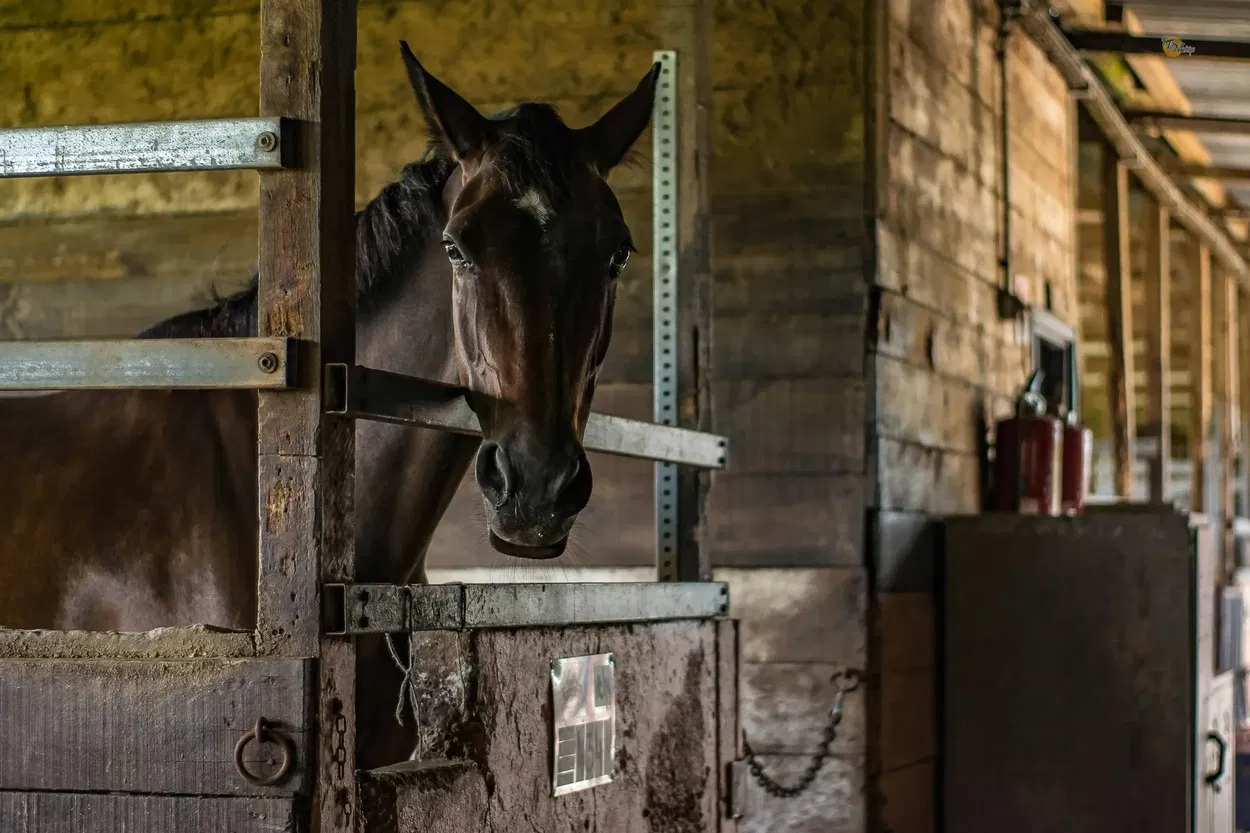
Insufficient turnout. A horse kept in a stable for 22+ hours a day and exercised for only 1–2 hours is being deprived of the continuous gentle movement, social contact, and environmental exploration that is fundamental to equine psychological and physical health. Extended stable confinement is a major driver of stereotypy development and is consistently identified as a welfare concern in equine behaviour research.
Boredom from lack of forage and enrichment. In the wild, horses spend approximately 16–18 hours per day grazing and moving. A stabled horse with limited hay access and no enrichment faces many hours of complete sensory monotony. The absence of foraging — which is not just nutritional but behavioural — drives anxiety, boredom, and stereotypy development. Gastric ulcers, which are extremely common in stabled horses, are both caused by and contribute to this stress.
Pain that is being missed. This cannot be overstated. Much behaviour that is described as temperament problems, bad attitude, or psychological distress is actually pain behaviour. A horse that is aggressive when girthed has pain in their back or girth area. A horse that resists contact may have a painful mouth or neck. A horse that is described as difficult in stable management may have gastric ulcers. Pain assessment should precede psychological assessment for every horse showing behaviour changes.
Trauma from previous harsh handling. Horses retain memories of frightening and painful experiences and form generalised fear associations from these experiences. A horse that was handled harshly during loading will generalise that fear broadly; a horse that was beaten during training develops fear associations with training contexts generally. These fear memories are persistent and often expressed as aggression, shutdown, or evasion that is misidentified as stubbornness or a training problem.
Over-competition and insufficient recovery. Horses competing at high levels without adequate physical and psychological recovery time develop stress indicators consistent with chronic psychological overload. The competition horse is repeatedly exposed to novel, high-arousal environments, often with little downtime, turnout, or social contact. This schedule would be stressful for any athlete; for a prey animal whose stress response is calibrated to be highly sensitive, it can be genuinely harmful.
Loss of a herd companion. Horses form genuine long-term bonds with preferred companions, and the loss of a bonded companion — through death, sale, or separation — produces measurable stress responses. Horses may search for their lost companion, show reduced appetite, increased vocalisation, and generally elevated arousal for days or weeks after the loss. Managing these transitions thoughtfully — avoiding simultaneous major changes, maintaining routine, and providing enhanced social opportunities — reduces the impact.
What Are Stereotypies and What Do They Tell Us?
Stereotypies are not vices — the outdated word that implies moral failing or bad character on the part of the horse. They are coping mechanisms: adaptive responses to environmental conditions that prevent the horse from expressing important natural behaviours. A horse that cribs has typically been deprived of adequate forage, social contact, or turnout to the extent that cribbing became a necessary self-soothing strategy.
Once established, stereotypies cannot be unlearned. Neurological research shows that the motor programmes for stereotypies become fixed in the brain and are maintained even when the conditions that caused them are improved. This is why prevention — through good management from the outset — is critically important. A horse that has never developed cribbing will not start cribbing if given good management; a horse that has cribbed for five years will continue to crib even in excellent conditions, though the frequency may reduce when underlying needs are better met.
Crib collars and anti-cribbing devices prevent the physical expression of the stereotypy but do not reduce the horse's need to cope — they add frustration on top of the existing stress. They may prevent tooth wear, which is a practical veterinary reason to use them in specific cases, but they are not a welfare solution and should not be used as a substitute for addressing the management conditions that caused the behaviour.
How to Improve Your Horse's Mental Wellbeing
Provide a companion. If full-time housing with another horse is not possible, sheep, goats, donkeys, and cattle all form successful companion relationships with horses. Even the presence of another animal in an adjacent space provides significant comfort to a socially stressed horse. Visual contact alone — seeing other horses from a field or stable window — is better than complete isolation.
Maximise turnout. Turnout time is the single most effective intervention for most management-related horse psychological problems. If 24-hour turnout is not possible, maximise the hours available. A horse in a field for 12 hours has significantly better welfare than one stabled for all but 2 hours of daily exercise.
Ad lib forage access. Providing continuous access to forage — ideally hay or haylage available at all times in a stable, through multiple small-holed hay nets to extend eating time — dramatically reduces the stress associated with food insecurity, reduces gastric acid accumulation (and therefore ulcer risk and behaviour associated with ulcer pain), reduces stereotypy development in young horses, and supports overall gut health.
Environmental enrichment. Suspended swinging bottles or balls, lick blocks, mirrors (which can reduce isolation stress in some horses), mineral blocks, objects to investigate in the paddock, and varied work environments all provide novel stimulation that reduces boredom.
Positive reinforcement training. Training that uses food rewards, scratching, or other positive reinforcements rather than or alongside pressure-and-release gives the horse agency over the interaction — the horse can earn good things through offering specific behaviours. This approach builds confidence, reduces fear, and supports the horse-human relationship in a way that pressure-only training cannot. It is particularly valuable for horses with fear or trauma histories.
Reducing stressful competition schedules. If a competition horse is showing signs of psychological stress — deteriorating behaviour, loss of enthusiasm, physical signs of chronic stress — an honest review of the competition schedule with reference to the horse's obvious wellbeing is warranted. No competition result justifies keeping a horse in chronic psychological distress.
The Connection Between Physical Pain and Behaviour
Gastric ulcers are extraordinarily common in horses — prevalence studies consistently find rates of 70–90% in sport horses and 40–60% in pleasure horses. The pain from gastric ulcers drives aggression during girthing, reluctance to work, and changes in temperament that are often attributed to attitude problems. Treatment with omeprazole resolves the ulcers and frequently resolves the behaviour simultaneously — which is the clearest demonstration that the behaviour was pain behaviour, not a psychological problem.
Back pain from poorly fitting saddles, kissing spine, or muscular issues; neck pain from dental-related head carriage problems; foot pain from early laminitis or unbalanced farriery — all present as behavioural changes that may be interpreted as resistance, reluctance, or temperament problems. Always investigate pain before concluding that a behaviour change is purely psychological. Your horse cannot tell you where it hurts; your job is to investigate systematically.
Frequently Asked Questions
Can horses get depressed?
Yes. Horses can experience states functionally equivalent to depression — persistent disengagement, low motivation, reduced social interaction, and shutdown quality — particularly in response to isolation, severe restriction, repeated frustration, and loss of companions. These states are measurable and represent genuine welfare concerns.
Is cribbing bad for a horse's health?
Yes, to some degree — it causes incisor wear, abnormal neck muscling, and is associated with elevated gastric ulcer risk. Crib collars prevent the physical expression but not the underlying need. Addressing management conditions is the right approach; crib collars alone are not a welfare solution.
How do I know if my horse is bored?
Stereotypy development, listlessness, reduced engagement with the environment, and increased irritability are the main signs. Always rule out pain first — a horse that appears dull or irritable may be in undiagnosed pain rather than simply bored.
Does my horse need a companion?
Yes. Horses are social animals and isolation is a genuine biological stressor. If another horse is not possible, a compatible companion animal (sheep, donkey, goat) provides significant benefit. Total isolation should be avoided.
Can a traumatised horse be rehabilitated?
Yes — many traumatised horses make remarkable recoveries with patient, positive, pain-free handling, a safe environment, and time. Recovery timelines vary but the prognosis for behavioural rehabilitation is generally good with the right approach.
For more on equine behaviour and welfare, visit the horse care hub. For guidance on managing stressed or difficult horses, explore our full range of horse behaviour resources.
Disclaimer: This article is for educational purposes only and does not constitute veterinary or behavioural advice. If your horse is showing significant behaviour changes or signs of psychological distress, consult a licensed equine veterinarian and consider referral to a certified equine behaviourist.

About the Author
Mike Albert Pet Care Advocate & Equine Wellness WriterMike is a passionate advocate for the welfare of horses, birds, and fish. With a background in animal husbandry and equine management, he brings firsthand experience to every guide he writes, helping owners provide the best possible care for a wide range of pets.

✓ Veterinary Reviewed
Dr. Ali Ehtisham, DVM Equine & Large Animals Rood & Riddle Equine Hospital — USADr. Ali Ehtisham is a Pakistani-trained equine veterinarian with experience at Rood & Riddle Equine Hospital. He specialises in horse health, performance, and preventive equine care.
LinkedIn ProfileReviewed for medical accuracy — not a substitute for professional veterinary advice. Learn about our review process.