
How to Introduce a New Horse to an Established Herd
Reviewed by Dr. Khurrum Shahzad Khosa, DVM
Introducing a new horse to an established herd is one of the higher-risk management situations that horse owners encounter. What appears to be a simple logistical exercise — opening a gate and letting horses meet — is actually a process of complex social negotiation between animals that can cause serious, life-threatening injury when it goes wrong. Understanding why horses behave as they do during introductions, and following a structured, patient approach, dramatically reduces the risk to all horses involved.
Herd Dynamics and Social Structure in Horses
Horses are social animals that live in hierarchical groups — every individual occupies a position in the social order that determines their access to resources such as food, water, shelter, and desirable resting spots. This hierarchy is not fixed permanently; it requires periodic re-negotiation, particularly when new individuals join the group.
The hierarchy is established and maintained through a combination of subtle body language — ear positions, head postures, approach and avoidance — and more active physical assertion: squealing, striking, kicking, and biting. Dominant horses control access to resources and space; subordinate horses move away when requested. In a stable, long-established herd, most of this negotiation occurs through low-level signals rather than active conflict. When a new horse enters, however, the established order is disrupted and a new hierarchy must be negotiated — a process that involves real physical risk, particularly for the newcomer who has no established relationships to rely on.
The injury risk arises because horses are powerful animals. A kick from a hind leg at full force can generate enough energy to fracture another horse's leg, crush a chest, or cause fatal abdominal injury. Kicks to the head can cause skull fractures and eye injuries. Most serious injuries from herd introduction are caused by kicks — and kicks happen fastest and with greatest force when a horse is cornered, panicked, or being attacked by multiple individuals simultaneously. Rushing the introduction process for the sake of convenience significantly amplifies this risk.
Quarantine: The Essential First Step
Before any introduction begins, a new horse arriving at a yard must be quarantined. A minimum quarantine period of two to three weeks is standard practice — ideally in a stable or paddock with a completely separate air space and no direct contact with resident horses. This period allows any infectious disease the new horse may be incubating to declare itself clinically before it can be transmitted to resident horses.
During quarantine, the new horse should be checked for strangles — one of the most transmissible equine respiratory diseases. Ideally this involves a guttural pouch lavage and PCR testing rather than a nasopharyngeal swab alone, as swab testing misses many carrier horses that are shedding Streptococcus equi without showing active disease. The horse should also be verified as up to date on vaccination (influenza, tetanus, and EHV as appropriate for your yard's protocol), dental examination, and worming — ideally guided by a faecal egg count. Use a completely separate set of equipment for quarantine horses: buckets, grooming tools, and rugs should not be shared with resident horses under any circumstances. These health checks protect not just the resident herd but also the new horse, whose immunity status on arrival is often unknown.
Fence-Line Introduction
Once quarantine is complete and the new horse has been health-cleared, the first stage of introduction is fence-line contact. The new horse is placed in a paddock or turnout area that shares a boundary with the established herd's paddock, separated by a safe, solid fence that prevents full physical contact but allows horses to see, smell, and hear each other.
The fence used for this stage is important. Single-strand electric fencing is not suitable — horses that lunge at each other across a single strand can easily put a leg over it and suffer a leg injury, or become entangled. Post-and-rail, post-and-multiple-strand, or good quality electric tape fencing with multiple strands at appropriate heights is better. An ideal option is two fences separated by a corridor of 1.5 to 2 metres — complete physical separation but with full olfactory and visual contact.
During fence-line introduction, place multiple hay piles on both sides of the fence — more piles than there are horses — to reduce resource competition at the boundary. Allow this stage to continue for a minimum of five to ten days, ideally longer. Squealing, striking at the fence, and threatening behaviour is normal and appropriate — allow the horses to work through this phase without intervention as long as no one is injuring themselves on the fence.
Controlled Introduction: One Companion First
The safest way to begin physical mixing is not to put the new horse into the full herd, but to introduce it to a single companion first. Choose the calmest, most socially stable individual from the resident herd — ideally a confident but not excessively dominant horse that is known to be reasonably tolerant of others.
Use a large paddock for this stage — space is critical. A small paddock forces horses into each other's space and prevents the new horse from escaping aggression, which increases the severity of conflict. Multiple hay piles placed far apart — ideally at opposite ends of the paddock — should be in position before turnout, so that both horses can eat without competing at the same point. Watch carefully for at least the first hour and remain available to observe intermittently throughout the day. Expect some chasing and threatening — monitor for escalating rather than settling behaviour, for one horse being unable to access water or food, and for signs of injury.
Adding Herd Members Gradually
Once the new horse has been turned out with its initial companion for several days and appears settled, begin adding herd members one at a time. Each addition restarts some degree of social negotiation, but with an established familiar companion already present, the new horse is not facing the full group alone. Add the most socially tolerant members first. Leave the most dominant individual until last — once the new horse has established relationships with several members of the group, the dominant horse is less likely to sustain an attack, and the new horse is more confident in the space and familiar with its escape routes.
Continue to use multiple hay piles placed at distance during the initial weeks, particularly at feeding times. Feed is one of the primary triggers for herd aggression — never introduce horses at the time when concentrate meals are given.
Safe Field Setup for Integration
The paddock used for any stage of integration should be assessed before horses are mixed. Remove or pad any sharp projections, metal gate hardware at height, and objects at head or chest height that a horse could be driven into during chasing. Ensure there are no tight corners where a horse could be trapped against two fence lines simultaneously — the most common scenario for a severe kick injury during introductions. The field should be large enough that both the chasing and the chased horse have sufficient run to reach a safe distance before turning — a minimum of half an acre for two horses, larger for multiple horses.
Multiple water sources placed well apart from each other are important during the integration period: a dominant horse can easily deny a subordinate access to a single water trough. Multiple feed stations (hay piles or racks) similarly reduce the opportunity for the new horse to be denied forage. For further practical guidance on equine management and turnout safety, see our horse management guides.
Which Horses Are Highest Risk During Integration
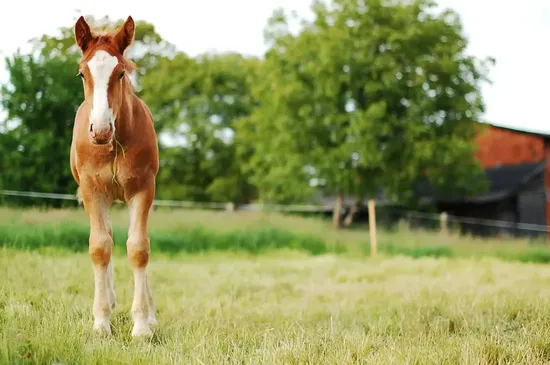
Some horses face disproportionately higher risk during herd introduction. Elderly horses with reduced mobility, pain from arthritis, or diminished reaction speed are less able to evade kicks and are more likely to be injured. Very young horses — foals and yearlings — can be seriously injured by established adult horses if mixing is not carefully managed and supervised. Horses with existing health conditions, particularly recent injuries or lameness, are at high risk because their ability to move away from aggression is compromised.
A horse that is unusually submissive and fails to assert any personal space boundaries can attract sustained bullying from dominant individuals. These horses sometimes do best introduced first to a single gentle companion rather than into a group where they will not establish any hierarchical position and will be continuously driven away from food and water.
When to Intervene
Owners instinctively want to intervene when horses threaten and chase each other, but unnecessary interference disrupts the natural process and prolongs the period of social instability. Normal herd-sorting behaviour — while it can look alarming — should be allowed to proceed without human intervention. Intervention becomes necessary when: one horse is cornered with no escape route; aggression is sustained and escalating rather than episodic and decreasing; a horse is showing signs of panic — sweating, trembling, extreme respiratory rate; or injury has already occurred.
When separation is needed, remove the aggressor from the field rather than the new horse. Repeatedly removing the new horse can reinforce the association between social conflict and isolation, which complicates future introductions. After separation, a day or two of fence-line contact before the next attempt typically reduces the intensity of the renewed encounter.
Frequently Asked Questions
How long does it take for horses to accept a new horse?
With a patient, staged approach, most horses reach a workable social arrangement within 2 to 4 weeks. Horses allowed to develop familiarity gradually through fence-line contact before mixing typically integrate faster than those introduced directly.
Should I remove shoes before introducing horses?
Yes, where possible — removing hind shoes from all horses significantly reduces the severity of kick injuries during the introduction period. Even a short period unshod behind is worthwhile if timing allows.
What is normal behaviour when introducing horses?
Squealing, striking, ear-pinning, chasing, and driving away are all normal herd-sorting behaviours. Concern arises when aggression is continuous and escalating, one horse is cornered with no escape, or signs of injury appear.
When should I separate horses that are fighting?
Separate when aggression is escalating rather than settling, one horse is cornered or panicking, or injury has occurred. Remove the aggressor rather than the new horse to avoid reinforcing flight behaviour.
Can I introduce a horse directly into the herd?
This approach carries a high injury risk and is strongly advised against. The additional two to three weeks required for a staged introduction is a small investment compared to the potential costs of a serious kick injury.
Disclaimer: This article is for educational purposes only and does not constitute veterinary advice. Always consult a licensed equine veterinarian for diagnosis and treatment.

About the Author
Mike Albert Pet Care Advocate & Equine Wellness WriterMike is a passionate advocate for the welfare of horses, birds, and fish. With a background in animal husbandry and equine management, he brings firsthand experience to every guide he writes, helping owners provide the best possible care for a wide range of pets.

✓ Veterinary Reviewed
Dr. Ali Ehtisham, DVM Equine & Large Animals Rood & Riddle Equine Hospital — USADr. Ali Ehtisham is a Pakistani-trained equine veterinarian with experience at Rood & Riddle Equine Hospital. He specialises in horse health, performance, and preventive equine care.
LinkedIn ProfileReviewed for medical accuracy — not a substitute for professional veterinary advice. Learn about our review process.