
Percheron Horse Breed Guide: The Gentle Draft Giant
Reviewed by Dr. Khurrum Shahzad Khosa, DVM
The Percheron is one of the great draft horse breeds of the world — and arguably the most internationally successful. At the height of its global export in the late 19th and early 20th centuries, Percherons could be found working on farms, pulling artillery, hauling freight, and logging timber on virtually every inhabited continent. It is a breed with a history as substantial as its physical presence, yet what sets the Percheron apart from many other heavy breeds is a quality that does not appear in the breed standard: an unusually cooperative, intelligent, and willing character that made it the preferred draft horse for demanding work across cultures and conditions.
Origins and History
The Percheron takes its name from the Perche region of Normandy in north-western France, where the breed was developed. The precise genetic origins are debated, but what is well-documented is that oriental blood — most notably Arabian — was introduced into the native Norman heavy horse population on multiple occasions throughout the 18th and early 19th centuries. This is not incidental to the breed's character: it is the direct explanation for the Percheron's relatively refined head, cleaner legs, better feet, and more active, willing temperament compared to many other draft breeds of purely cold-blooded descent.
By the mid-19th century the Percheron Stud Book had been established in France, and the breed's qualities were attracting enormous international attention. American horse breeders were among the most enthusiastic importers: between 1880 and 1905 alone, more than 30,000 Percherons were exported to the United States. The breed spread across North America, Australia, Argentina, and beyond, driven by its reputation for combining draft power with sound feet, hardy constitution, and manageable temperament.
The First World War had a devastating impact on the Percheron population. Both the French and American armies used Percherons extensively as artillery and supply horses, and losses were catastrophic. The subsequent mechanisation of agriculture in the post-war decades compounded the decline, as horse-powered farming was progressively replaced by tractors across most of the developed world. By the mid-20th century the Percheron was a breed in serious decline.
Recovery began from the 1960s onwards, driven by enthusiast breeders in France, North America, and elsewhere who valued the breed for its historical significance and practical qualities. Today the Percheron is one of the more numerous draft breeds globally, with particularly strong populations in France, the United States, and Canada.
Conformation and Appearance
The Percheron is a substantial horse with a powerful, muscular frame balanced by a degree of refinement uncommon in many draft breeds. Height ranges from approximately 15.2 hands for smaller mares to 19 hands for the largest individuals, though most working Percherons stand between 16.2 and 17.2 hands. Weight typically falls between 860 and 1,000 kg (approximately 1,900–2,200 lbs) for a horse in working condition.
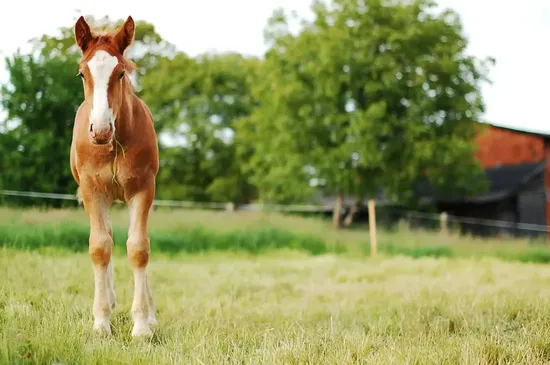
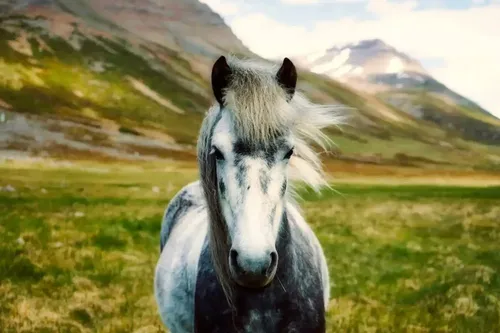
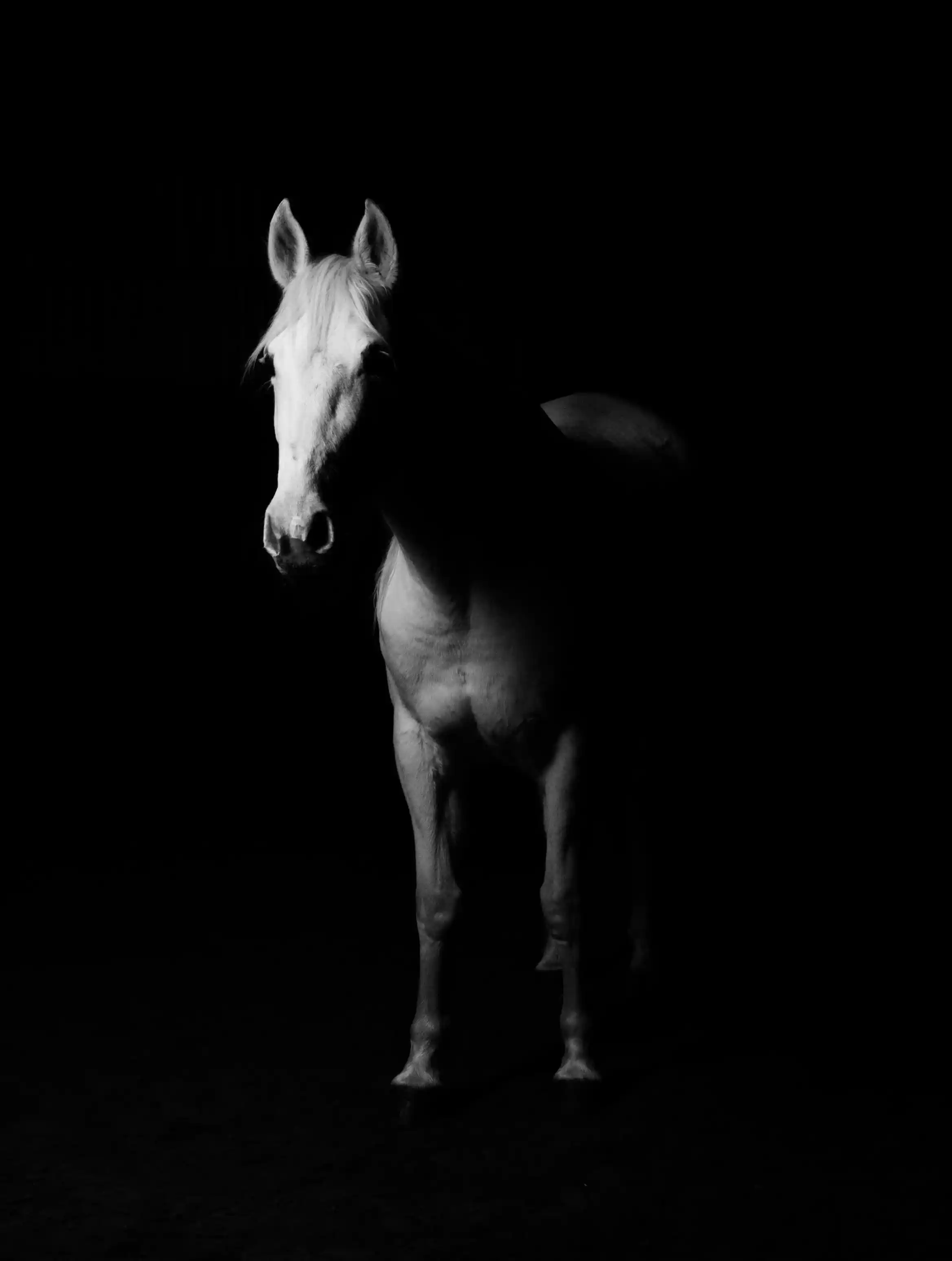
Colour is predominantly grey or black. Grey Percherons are often born black or very dark and lighten progressively with age, eventually reaching an iron-grey or near-white. Other colours — bay, roan, and chestnut — do occur but are less common. Grey is particularly associated with the breed in France.
The head is notably more refined than might be expected from a horse of this size — a direct inheritance from Arabian ancestry. It is relatively lean with a broad forehead, large, expressive eyes, and wide nostrils. The neck is well-arched and of reasonable length. The back is broad, strong, and typically short-coupled — important for carrying pulling power to the hindquarters. The hindquarters are wide, deep, and exceptionally muscular. Legs are relatively clean, with minimal feathering compared to Shires and Clydesdales — this characteristic is specifically valued as it reduces maintenance requirements and the risk of feather-related skin conditions. Feet are of good quality and size, notable in a breed where poor hoof quality in large-framed horses is a recognised problem.
Temperament
The Percheron's temperament is consistently cited by breed enthusiasts, historians, and working horsemen as one of its defining qualities. The breed is described as intelligent, willing, calm, and people-oriented — with a genuine work ethic that distinguishes it from many heavier and more phlegmatic draft breeds. This was not accidental: French breeders historically selected for temperament alongside conformation, understanding that a cooperative horse is more useful than a powerful but difficult one, and the infusion of Arabian blood contributed a level of intelligence and trainability not always associated with cold-blooded draft horses.
In practice, this means that Percherons are generally straightforward to handle and train despite their size. They tend to be willing learners, responsive to good horsemanship, and tolerant of the various demands of working life — from heavy farm work to public events where they encounter crowds, noise, and unusual environments. This cooperative character is particularly valued in North America, where Percherons are still used in Amish farming communities that depend on reliable, safe working horses in close proximity to people and machinery.
Modern Uses
The Percheron occupies a diverse range of roles in the 21st century. In North America, the Amish farming community remains the largest single user of working draft horses, and the Percheron is among the preferred breeds for field cultivation, transport, and forestry. Horse logging — using draught horses to extract timber from managed woodlands with minimal ground disturbance — is a growing practice in sustainable forestry, and Percherons are well-suited to this demanding work.
Competitive heavy horse driving is a significant outlet for the breed, both in traditional agricultural show classes where pairs and teams are judged on turnout and movement, and in competitive driving sport. The breed's size and presence make it a spectacular show ring animal.
Cross-breeding is another important modern application. Percheron stallions crossed with Thoroughbred, sport horse, or warmblood mares produce offspring combining substantial bone and substance with better-than-average athleticism — useful for producing heavier-boned hunters, heavyweight cobs, and even some sport horse types. The offspring of Percheron crosses are found in eventing, hunting, and pleasure riding worldwide.
Care and Health Considerations
Keeping a Percheron requires understanding and respecting the specific demands of a very large horse. Feeding requirements are substantially higher than for a light horse of equivalent height: a 900 kg Percheron requires approximately 13–18 kg of dry hay per day as a forage baseline, with additional hard feed in work. Cost of feeding must be factored into ownership calculations.
Farriery is a specialist undertaking with draft horses. Percheron feet are large but generally of good quality — better than many draft breeds — however finding a farrier with experience and equipment to shoe a very large horse is a practical consideration. Shoe size, weight of iron, and the physical demands of the work make draft horse farriery different from light horse shoeing.
Health concerns common to large heavy horses include joint issues from carrying great body weight throughout life, colic management consistent with all equines, and some susceptibility to chronic progressive lymphoedema in horses with feathering — though the Percheron's cleaner legs reduce this risk compared to Shires. As with all horses, regular dental care, vaccination, and parasite management are essential. Monitoring body condition in a horse of this size requires particular attention, as both obesity and weight loss in a 900 kg animal represent significant welfare concerns and are harder to reverse than in a smaller horse.
The Percheron in North America
The United States and Canada have the world's largest populations of Percherons outside France. The American Percheron tends to be somewhat larger and heavier than the French type — generations of American breeding selecting for maximum size and substance have produced horses at the very top of the height range. The Percheron Horse Association of America maintains the North American stud book and promotes the breed through shows, driving events, and working horse competitions.
Frequently Asked Questions
How big is a Percheron horse?
Percherons typically stand 15.2–19 hands and weigh between 860 and 1,000 kg. Most working Percherons fall in the 16.2–17.2 hands range. American Percherons tend toward the larger end of this range, while French working types are sometimes more compact.
What are Percherons used for today?
Percherons are used for farm work (particularly in Amish communities), competitive carriage driving, horse logging, agricultural shows, cross-breeding to produce heavyweight sport horses and cobs, and pleasure riding by larger riders who prefer a more substantial mount.
Are Percherons good for riding?
Yes — Percherons are among the more rideable draft breeds owing to their willing temperament, broader wither definition than some other drafts, and calm, cooperative nature. They are not suited to competitive sport horse disciplines but are valued for trail riding, hacking, and pleasure work.
How much does a Percheron eat?
A 900 kg Percheron in moderate work requires approximately 13–18 kg of dry hay per day as a forage baseline, with additional hard feed depending on workload. Daily calorie requirements are substantially higher than for a light horse of equivalent height.
Are Percherons better than other draft breeds?
No draft breed is objectively superior, but Percherons are distinguished by their refined head, cleaner legs, good feet, and notably willing, intelligent temperament — which made them the world's most exported draft breed in the 19th century. Individual variation within any breed remains significant.
Disclaimer: This article is for educational purposes only and does not constitute veterinary advice. Always consult a licensed equine veterinarian for diagnosis and treatment.

About the Author
Mike Albert Pet Care Advocate & Equine Wellness WriterMike is a passionate advocate for the welfare of horses, birds, and fish. With a background in animal husbandry and equine management, he brings firsthand experience to every guide he writes, helping owners provide the best possible care for a wide range of pets.

✓ Veterinary Reviewed
Dr. Ali Ehtisham, DVM Equine & Large Animals Rood & Riddle Equine Hospital — USADr. Ali Ehtisham is a Pakistani-trained equine veterinarian with experience at Rood & Riddle Equine Hospital. He specialises in horse health, performance, and preventive equine care.
LinkedIn ProfileReviewed for medical accuracy — not a substitute for professional veterinary advice. Learn about our review process.