
Quarter Horse Breed Guide: America's Most Popular Horse
Reviewed by Dr. Ali Ehtisham, DVM
The American Quarter Horse holds a remarkable distinction: it is the most registered horse breed in the world, with the American Quarter Horse Association (AQHA) maintaining over six million horses in its active registry. No other breed registry comes close to this number, and it reflects something real about the Quarter Horse's qualities. This is a breed that has earned its popularity by being genuinely useful, genuinely adaptable, and genuinely enjoyable to work with across an extraordinary range of contexts.
Origins: From Colonial America to the World
The Quarter Horse's story begins in the earliest years of European settlement in North America. Colonists in Virginia and the Carolinas during the 17th century brought with them imported English Thoroughbred stallions and bred them to native horses — horses that had descended from Spanish stock brought by early explorers and had been developed over generations by Native American tribes, particularly the Chickasaw Nation, who were sophisticated horse breeders with a keen eye for speed and endurance.
The resulting horses were tested in the most popular sporting event of colonial America: the quarter-mile sprint. The quarter-mile race was run on cleared roads, main streets of towns, and any suitable straight stretch of land, and the horses bred specifically for these events became known, logically, as quarter-milers — later abbreviated to Quarter Horses. Over the quarter-mile distance, these horses were without equal — the fastest horses in the American colonies, capable of speeds that Thoroughbreds selected for longer distances could not match in the sprint.
As the American frontier expanded westward, the Quarter Horse proved its versatility in entirely different contexts. Working cattle on the vast ranches of Texas and the west, the Quarter Horse's combination of explosive acceleration, natural cow sense, and even temperament made it the working cowboy's horse of choice. The cattle work tradition shaped the breed further — calmer, more thoughtful horses that could work all day were selected, and the modern Quarter Horse reflects both the sprint breeding of the colonial era and the working horse tradition of the western frontier.
The American Quarter Horse Association was founded in 1940 to formalise the breed registry, and the AQHA has grown to become the world's largest horse breed registry, headquartered in Amarillo, Texas.
Breed Characteristics
The Quarter Horse is a muscular, compact horse, typically standing between 14.3 and 16 hands. The overall impression is of power and balance — heavily muscled hindquarters built for explosive acceleration, a broad chest, strong short back, and a characteristic rounded, powerful croup. The head is short and wide, with large, intelligent eyes and a straight profile. The neck is of medium length, set well onto the shoulder.
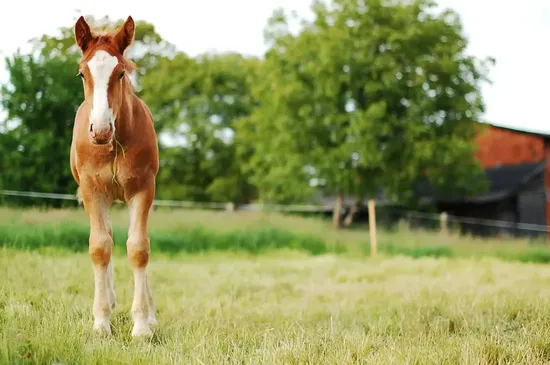
The breed comes in a wide range of colours. Sorrel — a reddish-brown that is similar to chestnut but distinct in Quarter Horse terminology — is the most common colour in the breed. Bay, black, chestnut, grey, palomino, buckskin, dun, roan, and various paint patterns also occur. The AQHA registers horses in all recognised equine colours.
Within the breed there are significant type variations. Stock horse-type Quarter Horses bred for ranch and western performance work tend to be broader, more heavily muscled, and more workmanlike in appearance. Halter-type Quarter Horses bred for the show ring have been selectively bred for extreme muscling — a trend that has created horses with an appearance far beyond what the functional working horse looks like, and which has been associated with increased rates of HYPP and other muscle-related health concerns. Race-type Quarter Horses are leaner and more Thoroughbred-influenced in conformation.
Temperament and the Famous "Cow Sense"
The Quarter Horse's temperament is one of its defining attributes and a major reason for the breed's global popularity. Quarter Horses are consistently described as calm, sensible, level-headed, and forgiving — qualities that make them accessible to riders of all levels and useful across an enormous range of contexts. Where sensitive, reactive breeds amplify the rider's tension and inexperience, the Quarter Horse tends to absorb it. Where a hot-blooded horse might overreact to a sudden noise or unexpected movement, a typical Quarter Horse pauses and assesses before responding.
"Cow sense" is a term used for the Quarter Horse's instinctive response to cattle: the ability to anticipate a cow's movement, stay with it, and work it without constant direction from the rider. This instinct is real, well-documented, and seen even in horses that have never worked cattle before. It manifests as a calm, focused attentiveness — the horse locks onto the cow and mirrors its movement as if the activity makes complete sense to them. This quality extends beyond cattle work into a general steadiness and practical intelligence that makes Quarter Horses outstanding trail, pleasure, and working horses.
Disciplines
The Quarter Horse's versatility across disciplines is genuinely exceptional. In western riding, they dominate virtually every discipline: reining (sliding stops, spins, and lead changes at speed), cutting (separating a specific cow from a herd), barrel racing (speed pattern around three barrels), western pleasure (slow, smooth, calm gaits under saddle), ranch work, and rodeo events including roping, steer wrestling, and western riding patterns. Their cow sense makes them exceptional working cattle horses, and many Quarter Horses are still used daily on working ranches throughout North America and increasingly across the world.
Quarter Horses also perform well in English disciplines. Hunter/jumper classes, trail, and even dressage regularly feature Quarter Horses. Their calm temperament and willingness to please translate across riding styles and training approaches. In racing, the sprint Quarter Horse — a distinct subtype within the breed — remains the fastest horse over the quarter-mile and competes in a dedicated racing circuit separate from Thoroughbred racing.
Genetic Health Conditions
The Quarter Horse carries a number of breed-specific genetic conditions that result from the closed breeding pool and, in several cases, from the widespread use of specific influential stallions. DNA testing is available for all of the major conditions, and responsible breeding decisions should incorporate this testing.
HYPP (Hyperkalemic Periodic Paralysis) is the most widely known Quarter Horse genetic disease. It traces entirely to one stallion — Impressive, a halter horse stallion of extraordinary muscling who won 1974 AQHA Supreme Champion and became enormously influential in halter breeding. Impressive carried a mutation in a sodium ion channel gene that causes episodes of muscle weakness, trembling, sweating, and, in severe cases, respiratory distress, collapse, or sudden death triggered by high dietary potassium. The AQHA now requires mandatory testing for Impressive descendants and no longer accepts registration of H/H (homozygous affected) horses.
GBED (Glycogen Branching Enzyme Deficiency) is a fatal condition in foals — affected foals die before or shortly after birth due to an inability to store glycogen in cells. Carrier horses appear healthy and normal. DNA testing identifies carriers.
HERDA (Hereditary Equine Regional Dermal Asthenia) is a skin fragility condition in which the collagen bonds in the dermis are defective, causing the skin to separate from the underlying tissue with minor trauma. Affected horses develop non-healing wounds, particularly along the back, and cannot be ridden. HERDA is concentrated in reining and cutting bloodlines. DNA testing identifies carriers and affected horses.
PSSM (Polysaccharide Storage Myopathy) is a muscle condition in which abnormal glycogen accumulates in muscle tissue, causing tying up (exertional rhabdomyolysis) — muscle pain, stiffness, and reluctance to move during or after exercise. Management through dietary modification (low-starch, high-fat diet) and regular consistent exercise reduces episode frequency significantly.
OLWS (Overo Lethal White Syndrome) affects horses with paint patterning (found in the Paint Horse breed, which shares significant Quarter Horse genetics). Foals born homozygous for the overo pattern gene are born white, with a defective enteric nervous system, and cannot pass intestinal contents. They die within days. Carrier testing and careful breeding decisions prevent this.
Easy Keeper Considerations
The Quarter Horse's easy keeper tendency is both a management advantage and a genuine welfare risk. On unrestricted pasture, particularly spring and summer grass, Quarter Horses can gain weight rapidly, increasing risk of laminitis, equine metabolic syndrome (EMS), and insulin dysregulation. Regular body condition scoring, grazing restriction when needed, and avoidance of high-sugar feeds are important management considerations for this breed. Laminitis prevention is particularly important — the metabolic conditions that predispose easy-keeper breeds to laminitis are the same ones that develop in Quarter Horses on unrestricted rich pasture.
Frequently Asked Questions
Are Quarter Horses good for beginners?
Well-trained Quarter Horses are among the best beginner horses available. Their calm, forgiving temperament and sensible responses make them accessible under qualified instruction. Stock-type Quarter Horses bred for ranch and western work tend to be the calmest and most suitable for novice riders.
What is HYPP in Quarter Horses?
HYPP is a genetic muscle disease tracing to the stallion Impressive, causing episodes of muscle weakness, trembling, and in severe cases collapse. It is triggered by high dietary potassium. The AQHA now requires DNA testing for Impressive descendants. Management includes a low-potassium diet and veterinary oversight.
What are Quarter Horses used for?
Quarter Horses excel in western disciplines including reining, cutting, barrel racing, western pleasure, and ranch work. Their cow sense makes them outstanding working cattle horses. They also compete in English disciplines and trail riding, and a specialist subset races over the quarter-mile sprint.
How much exercise does a Quarter Horse need?
As easy keepers prone to weight gain, Quarter Horses need regular exercise — at minimum several sessions per week — to maintain healthy weight and metabolic health. Working and competition horses require discipline-specific conditioning. Daily turnout benefits both physical and mental wellbeing.
Are Quarter Horses easy keepers?
Yes — Quarter Horses maintain weight on modest feed and can become obese on unrestricted rich pasture. This increases laminitis and metabolic syndrome risk. Body condition monitoring, grazing restriction in spring and summer, and avoidance of high-sugar feeds are important for this breed's long-term health.
Disclaimer: This article is for educational purposes only and does not constitute veterinary advice. Always consult a licensed equine veterinarian for diagnosis and treatment.

About the Author
Mike Albert Pet Care Advocate & Equine Wellness WriterMike is a passionate advocate for the welfare of horses, birds, and fish. With a background in animal husbandry and equine management, he brings firsthand experience to every guide he writes, helping owners provide the best possible care for a wide range of pets.

✓ Veterinary Reviewed
Dr. Ali Ehtisham, DVM Equine & Large Animals Rood & Riddle Equine Hospital — USADr. Ali Ehtisham is a Pakistani-trained equine veterinarian with experience at Rood & Riddle Equine Hospital. He specialises in horse health, performance, and preventive equine care.
LinkedIn ProfileReviewed for medical accuracy — not a substitute for professional veterinary advice. Learn about our review process.