
Shetland Pony Breed Guide: Small but Mighty
Reviewed by Dr. Khurrum Shahzad Khosa, DVM
There is a universally recognised quality about a Shetland pony that transcends its size. Compact, rounded, covered in an extraordinary mane and forelock that often obscures its entire face, the Shetland is simultaneously one of the most charming and one of the most misunderstood equines in the world. The Shetland's diminutive appearance conceals a history of extreme hardship, remarkable strength, and survival on the harshest archipelago in the British Isles. Understanding that history is the foundation for understanding everything about the breed: its metabolic efficiency, its health challenges, and its character.
Origins: Shaped by the Shetland Islands
The Shetland Isles lie approximately 170 miles north of the Scottish mainland, closer to Bergen in Norway than to Edinburgh. The archipelago is exposed to relentless Atlantic weather — fierce winds, driving rain, and severe winters — and its natural grazing consists of short, sparse moorland and coastal vegetation. Archaeological evidence suggests that small horses have lived on the Shetland Islands for at least 2,000 years, and perhaps much longer. The breed was shaped over millennia by natural selection in these conditions: animals unable to find and extract sufficient nutrition from sparse forage, maintain body condition through harsh winters, or endure relentless wind and rain did not survive to breed.
The result was a pony of extraordinary hardiness, metabolic efficiency, and physical strength relative to its size. The Shetland was not bred to be decorative or gentle — it was bred to survive. For centuries, Shetlanders used these ponies for all heavy work on the islands: carrying peat from the hills, pulling carts, transporting seaweed for fertiliser, and carrying panniers loaded with goods across trackless terrain. The working Shetland was an essential agricultural tool, and the breed's documented strength reflects the demands placed on it.
In the 19th century, following the Mines Act of 1842 which banned women and children from working underground in British coal mines, Shetland ponies were imported to mainland Britain in large numbers to work in the coal pits. Their small size made them ideally suited to the narrow seams, and their strength allowed them to pull substantial loads. Some of these pit ponies spent their entire working lives underground. The demand for Shetland pit ponies drove intensive breeding on the islands through the second half of the 19th century, and the Shetland Pony Stud-Book Society, founded in 1890, formalised the breed registry.
Conformation and Physical Characteristics
The Shetland is the smallest breed registered in the UK, with a maximum height of 40 inches (102 cm) at the withers. Within this height limit, the breed presents as a remarkably strong, densely built pony: deep through the girth, well-muscled through the shoulder and hindquarters, with substantial bone for the body size. The head is refined, with small alert ears and broad forehead. The neck is deep, set onto well-laid-back shoulders. The back is short and strong, and the hindquarters are notably powerful.
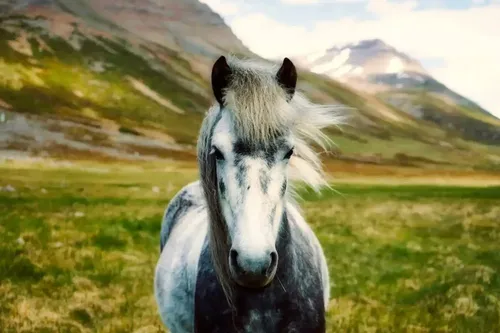
The most immediately distinctive feature of the Shetland is its coat. A double coat — a dense, fine underlayer combined with a coarser outer layer — provides insulation and near-waterproofing that allows the breed to withstand conditions that would require a fine-coated horse to be heavily rugged and stabled. The mane, forelock, and tail are often extraordinarily profuse. These features are functional rather than cosmetic: the thick forelock protects the face and eyes from driving rain and wind; the dense tail provides insulation and weather protection to the hindquarters.
The Shetland is reputedly one of the strongest equines relative to body weight of any breed. The commonly cited figure is an ability to carry approximately a quarter of its own body weight — a ratio that exceeds even that of large draught breeds. This extraordinary strength-to-weight ratio is the direct product of thousands of years of selection under the conditions of working life on the Shetland Islands.
Temperament
The Shetland's temperament is frequently mischaracterised in two opposite directions: either sentimentalised as automatically gentle and child-safe, or dismissed as invariably stubborn and difficult. Neither is accurate. The Shetland is highly intelligent and strong-willed — qualities that evolved in an animal that needed to problem-solve for survival on a harsh archipelago without human direction. This intelligence, in a well-trained pony handled by consistent and experienced people, produces a willing, engaging, and often affectionate animal. In a poorly trained pony handled by inexperienced adults and children, it produces a pony that quickly learns to take advantage of its handlers.
The Shetland's small size creates a management illusion: people assume that a pony this small cannot be genuinely dangerous or difficult. A 40-inch pony that refuses to move, bites, kicks, or barges is not dangerous in the way a 16-hand horse is dangerous — but it can cause real injury to a small child and can be deeply frustrating to manage. Shetlands that are handled from early life with clear, consistent boundaries, appropriate training, and respect for their intelligence become reliable and trustworthy. The management approach should not differ from that applied to any other equine of good breeding — small size does not substitute for proper training.
Laminitis: The Critical Health Risk
Laminitis is the most significant ongoing health challenge for Shetland ponies kept in modern management conditions, and it cannot be overstated in importance. The breed's extraordinary metabolic efficiency — the survival mechanism that allowed Shetlands to thrive on minimal sparse forage — becomes a serious liability on modern lowland pastures with their rich, high-sugar grass.
The metabolic mechanism behind laminitis in native breeds is insulin dysregulation: the horse's insulin response to dietary sugars and fructans is exaggerated, leading to elevated blood insulin levels that interfere with blood supply to the hoof laminae. The laminae are the sensitive structures that bond the pedal bone to the hoof wall, and when their blood supply is compromised, they become inflamed and lose structural integrity. In severe cases this allows the pedal bone to rotate or sink within the hoof capsule, causing lasting deformity and chronic pain.
Practical management to prevent laminitis in Shetlands requires: restricted grazing on lush pasture, with a grazing muzzle during high-risk periods (spring and autumn flush); strip grazing or very limited daily turnout time in summer; hay-only feeding during laminitis risk periods, with late-cut hay preferred for lower sugar content; avoidance of all concentrate feeds unless specifically required; monitoring body condition score to prevent obesity, which dramatically increases insulin dysregulation severity; and regular farriery to maintain correct hoof balance.
Equine Metabolic Syndrome and Insulin Dysregulation
Equine metabolic syndrome (EMS) is the underlying condition that predisposes native breed ponies including Shetlands to recurrent laminitis. EMS is characterised by insulin dysregulation, abnormal fat deposition (particularly the characteristic "cresty neck" and fat pads above the eyes and on the hindquarters), and in mares, sometimes reproductive abnormalities. EMS is not curable but is very effectively managed through diet control and exercise.
Blood testing — measuring resting insulin and glucose, or dynamic testing with an oral sugar test — allows EMS to be confirmed or excluded in at-risk ponies. Ponies with confirmed EMS require the most stringent grazing and dietary management, and may benefit from medical support with levothyroxine sodium in selected cases, as directed by a veterinarian.
Hyperlipemia: The Silent Emergency
Hyperlipemia deserves particular attention because it is an emergency condition that can develop very rapidly in Shetland ponies under stress or illness and is fatal if not caught and treated promptly. When a pony stops eating — for any reason, including illness, dental pain, pain elsewhere, social disruption, transport stress, or changes in management — the body mobilises fat stores from adipose tissue to provide energy. In native ponies with high fat reserves, this mobilisation can escalate rapidly to dangerous levels, flooding the bloodstream with triglycerides that overwhelm the liver's processing capacity.
Signs of hyperlipemia include dullness, lethargy, reduced appetite, loss of interest in surroundings, and eventually liver failure signs including jaundice and neurological signs. Any Shetland pony that is noticeably dull, off its food, or unwell should be seen by a veterinarian on the same day — hyperlipemia progresses rapidly and the window for successful treatment is narrow. Prevention requires ensuring ponies never go more than a few hours without access to hay or grazing, and being particularly vigilant in obese ponies undergoing dietary restriction or any pony under stress.
Showing and Breeding
The Shetland pony has a strong and active showing tradition, with classes at county and national level for standard Shetlands, miniature Shetlands, and in-hand foal classes. The Shetland Pony Stud-Book Society, established in 1890, maintains the breed registry and sets the breed standard. Harness classes — Shetlands driven to small vehicles — are particularly charming and showcase the breed's working heritage. Lead-rein showing classes for very young children with a Shetland pony are a staple of many agricultural shows and provide an introduction to the show ring for children as young as two or three years old.
Breeding Shetlands requires careful attention to the metabolic predispositions of the breed, avoiding breeding from ponies with severe EMS or recurrent laminitis where possible, and ensuring that show condition does not tip into obesity, which remains a problem in breed showing where an overweight appearance was historically considered indicative of good condition.
Frequently Asked Questions
Are Shetland ponies suitable for young children?
A well-trained Shetland can be an excellent first pony for a young child, but Shetlands are intelligent and strong-willed and require proper training and consistent adult supervision. They are not automatically safe or gentle by virtue of their size. Evaluate the individual pony's training and temperament carefully before placing any child on its back.
Why are Shetland ponies so prone to laminitis?
Their metabolism evolved over millennia to extract maximum energy from very sparse forage on the Shetland Islands. This extreme efficiency means the breed cannot safely process modern lush pasture, causing insulin dysregulation that leads to laminitis. Strict grazing management is essential year-round.
What is hyperlipemia in ponies?
A life-threatening condition in which a pony mobilises body fat too rapidly when it stops eating, flooding the blood with triglycerides and causing liver failure. It is an emergency requiring immediate veterinary attention. Any pony that is dull, off its food, or unwell must be seen by a vet the same day.
How much can a Shetland pony carry?
Approximately a quarter of their body weight — a higher ratio than most larger horse breeds. In practice, a standard Shetland is suitable for very young children typically under around eight to ten years old, after which most children become too heavy for comfortable ridden work.
How big do Shetland ponies get?
Maximum 40 inches (102 cm / 10.2 hands) at the withers. Miniature Shetlands are typically under 34 inches. Despite their small size, Shetlands are notably dense in bone and muscle, reflecting their working heritage and extraordinary strength relative to body size.
Disclaimer: This article is for educational purposes only and does not constitute veterinary advice. Always consult a licensed equine veterinarian for diagnosis and treatment.

About the Author
Mike Albert Pet Care Advocate & Equine Wellness WriterMike is a passionate advocate for the welfare of horses, birds, and fish. With a background in animal husbandry and equine management, he brings firsthand experience to every guide he writes, helping owners provide the best possible care for a wide range of pets.

✓ Veterinary Reviewed
Dr. Ali Ehtisham, DVM Equine & Large Animals Rood & Riddle Equine Hospital — USADr. Ali Ehtisham is a Pakistani-trained equine veterinarian with experience at Rood & Riddle Equine Hospital. He specialises in horse health, performance, and preventive equine care.
LinkedIn ProfileReviewed for medical accuracy — not a substitute for professional veterinary advice. Learn about our review process.