
Common Dog Behavior Problems: Causes and Solutions
Most dog behavior problems have a root cause, and addressing the root cause is the only reliable path to resolution. Punishment-based approaches — shouting, leash corrections, alpha rolls — may suppress behavior in the moment, but the underlying motivation (fear, frustration, excess energy, anxiety) is still there, often building until it re-emerges as a worse version of the original problem. Understanding why a dog is doing what it’s doing is the prerequisite to changing it.
Below are the six most common behavior problems, their causes, and what actually works.
Destructive Chewing
Why it happens: In puppies, destructive chewing is developmental — they need to chew, and if appropriate chew outlets aren’t provided, they self-select. In adult dogs, the common causes are insufficient physical exercise, insufficient mental stimulation, and anxiety (particularly separation anxiety). A dog who chews when left alone but not when you’re home is almost certainly experiencing separation-related distress, not willful misbehavior.
What works: Provide appropriate chew outlets: KONG Classic stuffed with kibble and frozen (the freezing extends the engagement time), bully sticks, and West Paw Tux or Toppl toys. Increase physical exercise — a tired dog chews less. For dogs who chew only when alone, the problem is separation anxiety and requires a desensitization protocol, not more chew toys. Punishing a dog after the fact does not work because dogs cannot retrospectively connect punishment to a behavior they performed earlier.
Jumping Up on People
Why it happens: Jumping is an attention-seeking behavior that is almost always reinforced accidentally. The dog jumps, the person pushes them down (physical contact), says "off" (verbal attention), or looks at them (eye contact) — all of these count as social rewards to the dog. The behavior is sustained by intermittent reinforcement, which makes it particularly resistant to extinction.
What works: Consistent removal of all attention the instant the dog’s front paws leave the ground — turn away completely, cross arms, look up or away. No talking, no touching. The moment all four paws return to the floor, immediately reward with attention and treats. Every person the dog greets must respond the same way — including guests and strangers. Inconsistency is why jumping problems persist in most households. Teaching a sit-for-greeting incompatible response accelerates the process: a dog who is asking to sit cannot simultaneously jump.
Pulling on the Leash
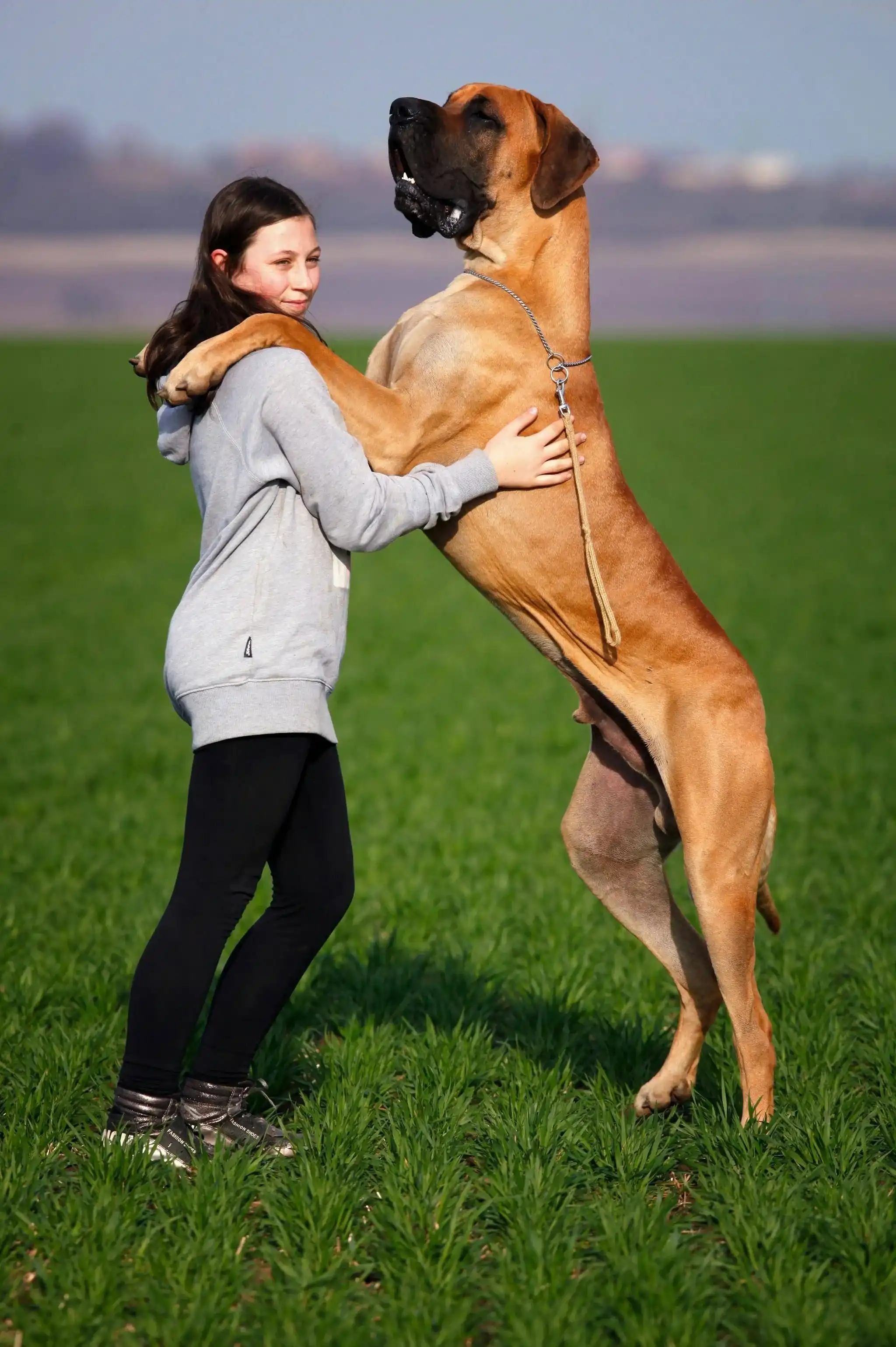
Why it happens: Dogs walk faster than humans and are naturally driven to investigate the environment ahead of them. Pulling is not stubbornness — it’s been reinforced every time the dog pulled and you followed, even reluctantly. The dog has learned that pulling moves them toward what they want.
What works: Stop moving the moment the leash goes taut. Stand still until the dog returns to your side or the leash goes slack, then continue walking. This consistently communicates that tension on the leash produces no forward movement, and loose leash produces forward movement. Initially this means almost no walking progress — that’s normal. Consistency over 2–4 weeks produces a significant change. A front-clip harness (Ruffwear Front Range, Freedom No-Pull Harness) redirects the dog’s chest toward you when they pull, making pulling mechanically uncomfortable and easier to manage during the training period. Head halters (Gentle Leader) are effective for large, powerful dogs but require careful introduction to avoid the dog’s resistance to the nose piece.
Excessive Barking
Why it happens: Barking is a natural communication behavior, and the type of barking matters for the approach. Territorial/alarm barking (at people passing the window or the doorbell) is driven by protective instinct. Demand barking (barking for food, attention, or play) is maintained by intermittent reinforcement. Boredom barking happens when a dog has insufficient stimulation. Anxiety barking (during storms, fireworks, when alone) requires a different approach than any of the above.
What works: For alarm barking, teach an incompatible behavior: "place" command (go to a designated mat and stay) combined with counter-conditioning — the sound of the doorbell predicts treats and calm. For demand barking, remove all reinforcement (attention, food, play) until the dog is quiet, then immediately provide what they’re asking for. The dog must learn that silence is what gets them things, not noise. For anxiety-driven barking, the barking is a symptom — address the anxiety through desensitization, management, and potentially anti-anxiety medication recommended by a vet.
Aggression Toward Other Dogs
Why it happens: Dog-directed aggression typically has one of three roots: under-socialization during the critical window (puppies not properly exposed to other dogs before 16 weeks), a prior traumatic experience with another dog, or leash frustration (a dog who is social off-leash but reactive on-leash because the leash prevents the normal greeting approach). The on-leash variety is the most common and most misunderstood — owners often assume their dog "hates dogs" when the problem is leash confinement anxiety, not genuine aggression.
What works: Counter-conditioning and desensitization: pair the trigger (sight of another dog at a distance that does not provoke a reaction) with high-value treats repeatedly. Gradually decrease the distance at the pace the dog’s comfort allows. The critical rule: never expose the dog to a distance/intensity that produces the aggressive reaction during training — this worsens sensitization rather than reducing it. For severe dog aggression, work with a veterinary behaviorist (DACVB) or a Certified Applied Animal Behaviorist (CAAB), not a general trainer.
Separation Anxiety
Why it happens: Separation anxiety is a panic response to being alone, not attention-seeking misbehavior. Dogs with true separation anxiety show specific signs: distress beginning when departure cues start (picking up keys, putting on shoes), and behaviors that occur only in the owner’s absence (destructive chewing, house soiling, self-injury, sustained vocalization). It is maintained and often worsened by punishing the aftermath, because the dog cannot connect punishment to the anxiety response that occurred earlier.
What works: Systematic desensitization to departure cues: practice putting on shoes without leaving, picking up keys without opening the door, and build duration of absence from 5 seconds to longer over weeks. Departure enrichment (KONG stuffed with frozen food given only when leaving) creates positive association with departure. For moderate to severe separation anxiety, medication (fluoxetine or clomipramine prescribed by a vet) combined with behavior modification produces significantly better results than behavior modification alone. This is one of the behavior problems most likely to require professional guidance.
Frequently Asked Questions
Why has my dog suddenly started behaving badly?
A sudden onset of new behavior problems in a dog who was previously well-behaved is frequently a medical signal, not a training problem. Pain commonly presents as aggression (a dog who snaps when touched in a specific area), house soiling can indicate UTI, kidney disease, or cognitive dysfunction, and sudden anxiety spikes can reflect thyroid dysfunction or neurological issues. A thorough vet examination is the appropriate first step when behavior changes suddenly without an obvious environmental cause, before assuming the cause is behavioral.
Does punishment work for dog behavior problems?
Punishment has a narrow window of effectiveness — it must be immediate (within 1–2 seconds of the behavior), aversive enough to be meaningful without causing fear, and consistent across all contexts. Meeting these requirements reliably is difficult in practice. More significantly, punishment addresses the behavior without addressing the motivation, and fear-suppressed behavior can re-emerge as a more extreme version. The research on punishment-based training in dogs consistently shows that positive reinforcement approaches produce better long-term outcomes with less risk of fear and anxiety side effects. Most modern veterinary and behavioral organizations advise against physical punishment and devices like prong collars or e-collars on dogs.
How long does it take to fix a dog behavior problem?
It depends on how long the behavior has been reinforced, the severity, the dog’s anxiety baseline, and consistency of the training approach. Jumping can be substantially reduced in 2–3 weeks with completely consistent application. Leash reactivity typically takes 2–6 months of regular structured counter-conditioning. Separation anxiety can take 6–12 months or longer, particularly in severe cases. The most common reason behavior modification fails is inconsistency — one person applying the protocol correctly while others don’t. All household members and frequent visitors must apply the same rules.
When should I see a professional about a dog behavior problem?
See a veterinary behaviorist (DACVB — board-certified specialist) when: the behavior involves aggression toward people, the behavior is causing injury risk, you have been working on the problem consistently for more than 2–3 months without meaningful progress, or medication may be indicated. A Certified Applied Animal Behaviorist (CAAB) or Certified Professional Dog Trainer (CPDT-KA) is appropriate for behavior problems without medical or severe components — excessive barking, pulling, jumping, mild leash reactivity. Avoid trainers who use dominance theory, require shock collars, or use physical corrections as primary tools.
Final Thoughts
Most dog behavior problems are addressable with consistent positive reinforcement, appropriate exercise and enrichment, and occasionally professional guidance. The earlier you address a problem, the less entrenched the behavior becomes. A behavior that’s been reinforced for 6 months takes longer to change than one that’s been happening for 2 weeks — starting the work now matters.
For more on dog training and health, see our new dog owner checklist and the dog care resource hub.

About the Author
Sarah Eve Pet Care Specialist & Canine Behaviour ConsultantSarah is a certified canine behaviour consultant with a background in veterinary nursing. She has helped thousands of dog owners navigate everything from puppy training to senior dog care, combining clinical knowledge with practical, real-world advice.

✓ Veterinary Reviewed
Dr. Jamshed Bilal, DVM Companion Animals (Cats & Dogs) Anjum Veterinary Clinic — PakistanDr. Jamshed Bilal is a companion animal veterinarian practising at Anjum Veterinary Clinic with hands-on clinical experience in small animal medicine, wellness care, and preventive treatments.
LinkedIn ProfileReviewed for medical accuracy — not a substitute for professional veterinary advice. Learn about our review process.