
Dog Bloat (GDV): Signs, Emergency Action and Prevention
Reviewed by Dr. Jamshed Bilal, DVM
Gastric dilatation-volvulus — known as GDV, or simply bloat — is one of the most terrifying emergencies a dog owner can face. It can kill a large, healthy dog in a matter of hours. The window between first symptoms and death can be agonisingly short. If you own a large or giant breed dog, understanding GDV is not optional; it is knowledge that could save your dog's life. Read this carefully, share it with everyone in your household, and save your emergency vet's number in your phone before you need it.
What Is GDV? Understanding the Mechanism
The stomach sits in the abdomen suspended by ligaments that allow it to move as it fills and empties. In gastric dilatation, the stomach fills with gas — from swallowed air, fermentation, or a combination of both — and expands dramatically. This alone is serious; a severely distended stomach compresses the surrounding organs and blood vessels, causing pain and cardiovascular compromise.
In GDV (gastric dilatation-volvulus), the distended stomach rotates on its axis — typically 90 to 360 degrees — twisting like a balloon. This rotation traps gas inside, preventing belching or vomiting that might otherwise relieve the pressure. More critically, it twists the blood vessels supplying the stomach, cutting off blood flow to the stomach wall and spleen. Without blood supply, the stomach tissue begins to die. Toxins from the dying tissue flood into the bloodstream. The heart develops abnormal rhythms (arrhythmias). The dog goes into hypovolaemic shock. Without immediate emergency intervention, death follows.
It is important to understand the difference between simple bloat (gastric dilatation without rotation) and true GDV (dilatation with volvulus). Simple bloat can occasionally resolve, but from the outside, you cannot tell which one your dog has. Treat every case of suspected bloat as a GDV until a vet confirms otherwise.
Recognising the Signs: What to Watch For
Knowing the signs of GDV and acting on them immediately is the difference between a surviving dog and a dead one. The signs often develop rapidly — within minutes to hours — and worsen as the condition progresses.
Early Signs
- Unproductive retching: The dog repeatedly attempts to vomit but nothing comes up, or only small amounts of froth or saliva. This is the cardinal sign of GDV. A dog that is retching and bringing nothing up needs emergency veterinary attention immediately.
- Distended abdomen: The belly appears visibly enlarged, particularly behind the ribcage on the left side. In some dogs with thick coats or large body mass, this can be difficult to see, but you may feel the tension when you press gently on the abdomen.
- Restlessness: The dog cannot settle, paces, changes position frequently, and shows obvious signs of discomfort.
- Excessive drooling or salivation: Hypersalivation is a sign of nausea and distress.
- Looking at the belly: The dog may repeatedly turn to look at its own abdomen or assume a "prayer position" (front legs down, hindquarters raised) in an attempt to relieve discomfort.
Later Signs
- Rapid or laboured breathing: The expanded stomach presses against the diaphragm, reducing the ability to breathe normally.
- Pale, white, or greyish gums: This is a sign of shock and cardiovascular compromise — a critical emergency indicator.
- Weakness and collapse: The dog becomes unable to stand or loses consciousness.
- Rapid, weak pulse: Detectable if you can feel the femoral pulse on the inner thigh.
If you see unproductive retching combined with a swollen belly in a large breed dog, call your vet immediately. Do not wait. Do not monitor to see if it improves. Call now.
Why GDV Is Fatal Without Treatment
The sequence of events in GDV creates a rapidly escalating crisis. When the stomach rotates, the spleen — which is attached to the stomach — often rotates with it and becomes engorged and twisted. Blood that would normally circulate through the portal vein to the liver is blocked. The stomach wall, deprived of blood, undergoes ischaemic necrosis — the tissue dies. Endotoxins from bacterial overgrowth in the dying stomach tissue enter the bloodstream, triggering systemic inflammatory response syndrome. The heart responds to the toxins and the electrolyte disturbances caused by shock with potentially fatal ventricular arrhythmias.
A dog with GDV is in a race against this cascade of events. Every hour of delay worsens the prognosis. Studies have shown that mortality rates for GDV surgery are significantly higher when surgery is delayed, and the probability of needing partial stomach removal — which worsens outcomes further — increases with time.
At-Risk Breeds
While any dog can theoretically develop gastric dilatation, GDV is overwhelmingly a disease of large and giant, deep-chested breeds. The deep, narrow chest creates a larger potential space for the stomach to swing and rotate. The following breeds are at significantly elevated risk:
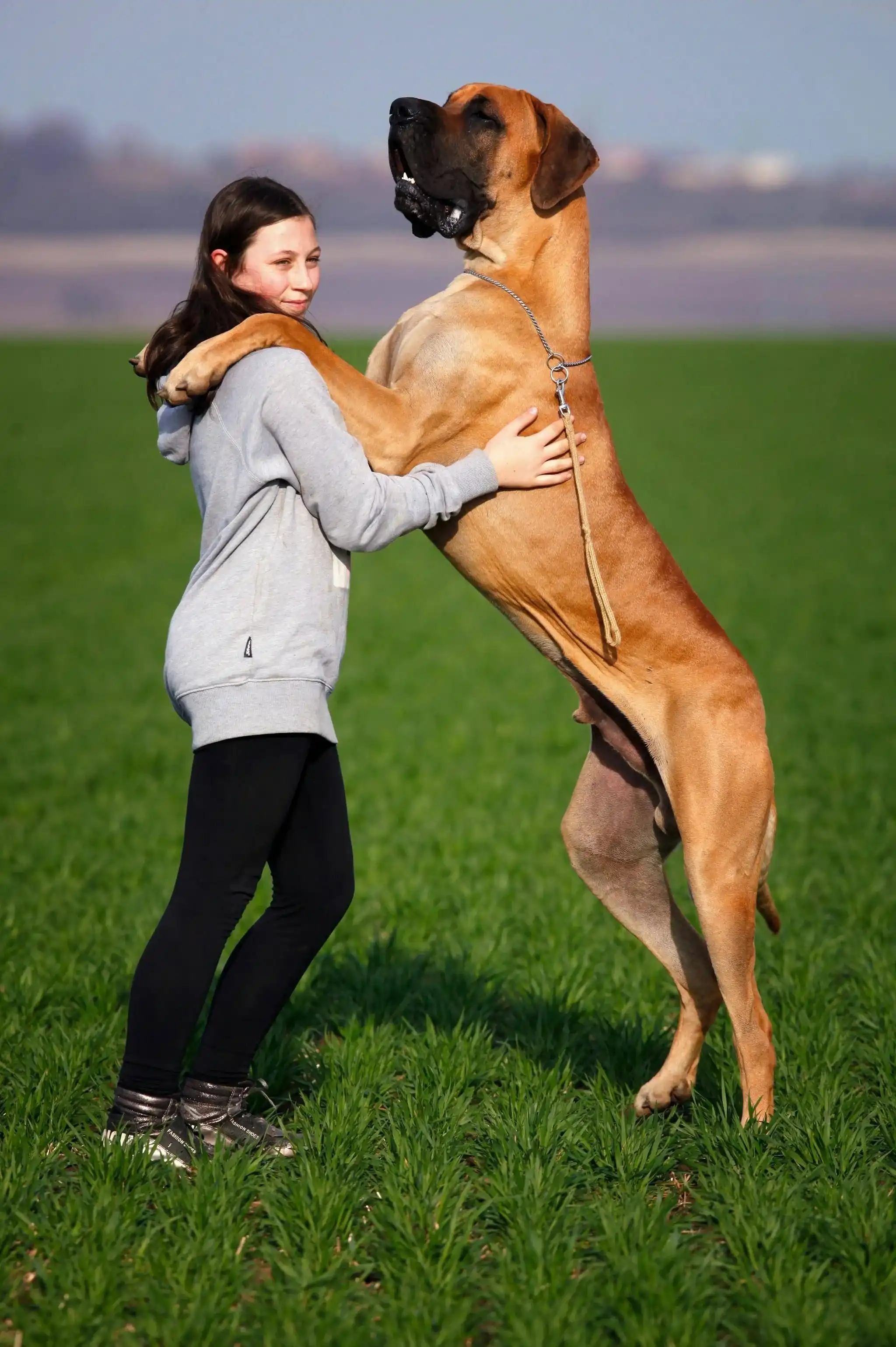
- Great Dane — the highest lifetime risk of any breed; some studies put the lifetime GDV risk at over 40%
- Irish Wolfhound
- German Shepherd
- Standard Poodle
- Dobermann
- Weimaraner
- Saint Bernard
- Gordon Setter and Irish Setter
- Bloodhound
Risk also increases with age and body size. Dogs whose first-degree relatives have had GDV are at elevated risk, suggesting a hereditary predisposition in some lines.
Risk Factors: What the Evidence Says
Research into GDV risk factors has produced some clear findings and some ongoing debate.
One Large Meal Per Day
Feeding one large meal per day rather than splitting the daily ration into two or more meals has been associated with increased GDV risk in several studies. The simple logic is that a larger volume of food in the stomach creates more opportunity for gas accumulation and rotation. Feeding two meals a day is a straightforward, low-cost risk reduction strategy.
Eating Fast
Dogs that eat rapidly swallow large amounts of air along with their food, contributing to gastric distension. Slow-feeder bowls, portion sizes spread across multiple meals, and puzzle feeders can all reduce the speed of consumption.
Exercise Around Mealtimes
Vigorous exercise immediately before or after eating is a traditional risk factor, and many owners are cautious about this. The evidence is less definitive than once believed, but caution around exercise at mealtimes remains sensible practice — waiting at least an hour after a meal before strenuous exercise is a reasonable precaution.
Raised Food Bowls
For years, raised feeding stations were recommended for large breed dogs on the theory that they reduced the need to swallow air. This advice has been largely reversed by research, with some studies actually finding an association between raised bowls and increased GDV risk. The current consensus is that there is insufficient evidence to recommend raised bowls for GDV prevention.
Treatment: Emergency Surgery
GDV requires emergency surgery. There is no medical management that can resolve a volvulus. When the dog arrives at the veterinary clinic, the initial priority is stabilisation — intravenous fluids to address shock, oxygen supplementation, and gastric decompression (passing a tube into the stomach to release gas, where possible). Once the dog is stable enough for anaesthesia, surgery is performed to untwist the stomach and assess the stomach wall for necrotic tissue.
If sections of the stomach wall are non-viable (dead), they must be surgically removed — a partial gastrectomy. If the spleen has become compromised, it may need to be removed as well. At the time of surgery, a permanent gastropexy is performed: the stomach is sutured to the abdominal wall to prevent re-twisting. Dogs that survive GDV without a gastropexy are at extremely high risk of a recurrence.
Post-operative monitoring focuses particularly on cardiac arrhythmias, which may develop or worsen in the hours following surgery. The overall survival rate for GDV surgery ranges from roughly 80 to 90% when treatment is initiated early, falling significantly when surgery is delayed or when substantial stomach tissue has died.
Prophylactic Gastropexy: Prevention for At-Risk Breeds
For breeds with a high lifetime GDV risk — particularly Great Danes, Irish Wolfhounds, and Standard Poodles — prophylactic gastropexy is strongly recommended. This is a planned surgical procedure, usually performed at the time of neutering, in which the stomach is permanently attached to the abdominal wall. It prevents the stomach from rotating, essentially eliminating the risk of volvulus, though the stomach can still distend with gas (simple bloat).
The procedure can be performed laparoscopically (keyhole surgery) in many cases, reducing recovery time. In a young, healthy dog, the anaesthetic and surgical risk is low, and the lifelong protection it provides is highly valuable. If you own a Great Dane, Irish Wolfhound, or another very high-risk breed, discuss prophylactic gastropexy with your vet at your puppy's first appointment. Do not wait until the dog has had GDV to have the conversation.
What NOT to Do
Several things that might seem helpful are dangerous in the context of suspected GDV:
- Do not try to treat at home. There is nothing you can do at home to resolve a GDV. Do not try to pass a garden hose down the dog's throat, administer Gas-X, or follow any home remedy advice. Drive to the vet.
- Do not wait overnight. There is no safe "wait and see" period with suspected GDV. Dogs that appear merely uncomfortable can deteriorate rapidly. If your regular vet is closed, go to the nearest emergency veterinary clinic.
- Do not assume the dog will settle. GDV does not resolve on its own. The clock is running from the moment symptoms begin.
Frequently Asked Questions
What are the first signs of bloat in dogs?
The first signs of bloat (GDV) include a visibly distended abdomen, repeated unproductive retching (attempting to vomit but nothing coming up), excessive drooling, restlessness, and signs of discomfort. As the condition progresses, rapid breathing, pale gums, weakness, and collapse may occur. Any combination of these signs is a veterinary emergency — call your vet immediately.
Which dog breeds are most at risk of GDV?
Deep-chested large and giant breeds are most at risk. The Great Dane has the highest lifetime risk, with some studies suggesting over 40% will develop GDV. Other high-risk breeds include Irish Wolfhounds, German Shepherds, Standard Poodles, Dobermanns, Weimaraners, Saint Bernards, and Gordon Setters. Risk increases with age and body size.
How quickly is GDV fatal in dogs?
GDV can be fatal within hours of onset without emergency treatment. When the stomach twists, blood supply is cut off, toxins enter the bloodstream, and the dog goes into shock. Even with prompt surgery, survival rates decline significantly with delay. This is a true veterinary emergency — there is no time to wait and see.
Can bloat in dogs resolve on its own?
No. While simple gastric dilatation without twisting may occasionally resolve, there is no way for an owner to distinguish this from GDV at home — and GDV is fatal without surgery. Any dog showing signs of bloat must be seen by a vet immediately. Never wait to see if the dog improves on its own.
What is a prophylactic gastropexy?
A prophylactic gastropexy is a preventive surgery in which the stomach is permanently attached to the abdominal wall, preventing it from rotating. It is recommended for high-risk breeds such as Great Danes and is most commonly performed at the time of neutering. The procedure dramatically reduces the lifetime risk of GDV and carries low risk when performed in a healthy young dog.
Disclaimer: This article is for educational purposes only. Always consult your veterinarian before making significant changes to your dog's care or training routine.

About the Author
Sarah Eve Pet Care Specialist & Canine Behaviour ConsultantSarah is a certified canine behaviour consultant with a background in veterinary nursing. She has helped thousands of dog owners navigate everything from puppy training to senior dog care, combining clinical knowledge with practical, real-world advice.

✓ Veterinary Reviewed
Dr. Jamshed Bilal, DVM Companion Animals (Cats & Dogs) Anjum Veterinary Clinic — PakistanDr. Jamshed Bilal is a companion animal veterinarian practising at Anjum Veterinary Clinic with hands-on clinical experience in small animal medicine, wellness care, and preventive treatments.
LinkedIn ProfileReviewed for medical accuracy — not a substitute for professional veterinary advice. Learn about our review process.