
How to Read Dog Body Language: A Complete Visual Guide
Reviewed by Dr. Jamshed Bilal, DVM
Dogs communicate continuously. Every interaction, every encounter with another dog or person, every moment in a new environment is accompanied by a stream of body language signals. The problem is that most people are not taught to read them. The consequence of that literacy gap is significant: misread signals lead to mismanaged situations, preventable stress for dogs, and — in the worst cases — bites that the dog's body had been warning about for some time before anyone noticed.
Learning to read canine body language accurately is one of the most practically useful things a dog owner can do. It improves training, strengthens the relationship, and makes daily life safer for everyone involved.
Why This Knowledge Matters
Most dog bites are not random. They follow a predictable escalation — from early, subtle stress signals through to clear warning signals — and they happen because the signals were missed or because the dog had learned that its earlier signals would be ignored. A dog that growls and is punished for growling learns to suppress the growl — it does not learn to be comfortable with the situation. The result is a dog that may bite with far less observable warning. Understanding what dogs are saying protects both dogs and the people around them.
Beyond safety, body language literacy changes the quality of the relationship. When you can see that your dog is uncomfortable before it escalates to panic, you can help. When you can see that your dog is relaxed and happy, you know your care is working. The connection between human and dog deepens substantially when communication becomes genuinely two-directional.
The Golden Rule: Read the Whole Dog
Before going through specific signals, this principle must be established: never interpret a single signal in isolation. A wagging tail means nothing definitive without knowing tail height and speed. A yawn outside a tired context means nothing definitive without looking at what else the dog is doing. Each signal is a word; body language is a sentence. Experienced readers absorb the whole picture simultaneously. For beginners, consciously work through the main zones — tail, posture/weight distribution, ears, eyes and face — and then synthesise what you are seeing.
Relaxed and Happy Signals
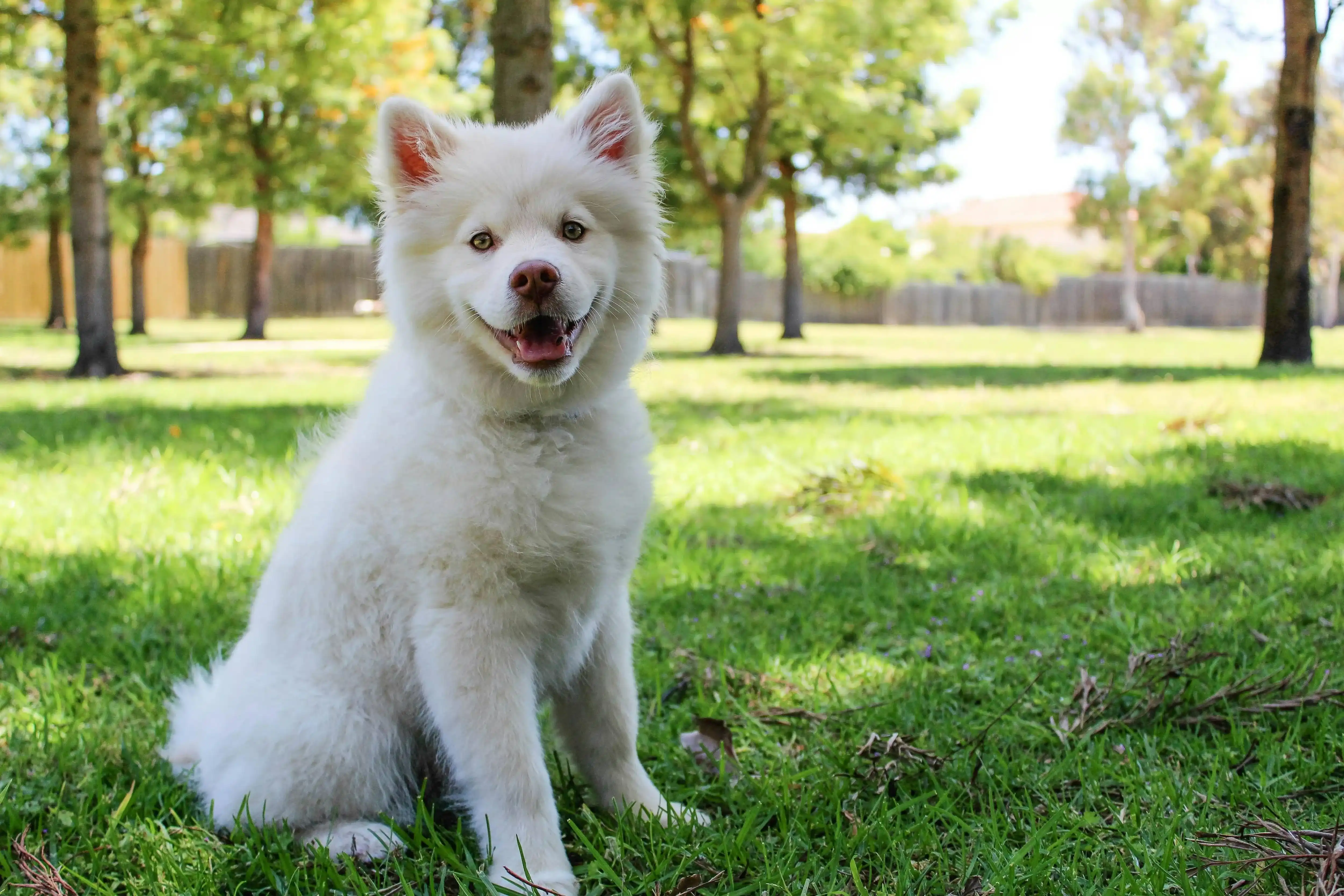
A comfortable, content dog is characterised by looseness. The body is soft rather than rigid — muscles are not visibly tense, the coat lies flat, movements are flowing rather than stiff. The mouth is relaxed and slightly open, possibly with the tongue loosely hanging out. Breathing is slow and even. The tail hangs at or near neutral height (varies by breed — a Greyhound's neutral is lower than a Beagle's) and swings in a loose, full arc. The eyes are soft — the lids are slightly relaxed rather than wide-open or squinted hard. This is the dog you are aiming to create and maintain in daily life.
Playful Signals
The play bow is the most unambiguous of all canine signals — front end down, hindquarters up and often wiggling, tail wagging loosely. It is an explicit invitation to play and is also used mid-interaction to "reset" the playful tone if a moment became too intense. Play is characterised by a bouncy, exaggerated quality of movement — the "play face" has a relaxed open mouth, and actions that might otherwise look threatening (chasing, body-checking, mock biting) are interspersed with pauses and role reversals that distinguish them from genuine conflict.
Calming Signals
Calming signals are subtle and frequently missed by owners. They are the dog's attempts to communicate peaceful intent, reduce tension, or indicate that it needs more space. Norwegian trainer Turid Rugaas identified and catalogued these signals extensively, and the framework is widely used by behaviourists and trainers.
Turning the head away — a dog that turns its head to one side during an approach or interaction is signalling that it is not a threat and is asking the other party to reduce pressure. If a stranger leans over a dog and the dog turns its head, this is not indifference; it is a communication.
Yawning — outside a genuinely tired context, yawning is almost always a calming signal. Dogs yawn when stressed, when they feel pressure, and when they are in an uncomfortable social situation. Many dogs yawn at the vet, in the car, or during tense training sessions.
Lip licking / tongue flick — a quick, short flick of the tongue — often just touching the nose — that is distinctly different from the long, lazy tongue movements associated with eating or panting. In a context of interaction or perceived pressure, this is a stress indicator.
Sniffing the ground — a dog that suddenly develops intense interest in the ground during an approach from another dog or person is very likely using a calming signal rather than genuinely investigating a scent. It is a way of communicating non-threat and asking for a pause in pressure.
Blinking — slow, deliberate blinking signals relaxation and non-threat. Conversely, a dog that rarely blinks — maintaining an unbroken stare — is communicating arousal or challenge.
Stress Signals
Stress signals indicate that the dog is experiencing emotional discomfort — not necessarily in danger of aggression, but struggling with the current situation. Recognising stress early allows intervention before it escalates.
Panting without a physical cause — when a dog is not hot and has not exercised, panting indicates anxiety. This is common at the vet, in the car, during thunderstorms, and in any situation the dog finds aversive.
Tail position — a tail tucked firmly between the legs or held very low against the abdomen indicates fear or submission. A tail that is carried lower than the dog's neutral position, without full tucking, indicates mild anxiety or uncertainty.
Ears flattened — ears pulled back flat against the skull in a breed with erect or semi-erect ears signals fear or appeasement. In floppy-eared breeds this signal is harder to read and requires looking at the base of the ear and the tension in the surrounding skin.
Whale eye — the white of the eye becoming visible at the corners when the dog turns its head but keeps its eyes fixed on something. This is a reliable stress indicator and is often seen when dogs are hugged against their will.
Shaking off — a full-body shake, similar to the motion of drying after a swim, when no physical cause is present. Dogs shake off after stressful interactions as a kind of reset behaviour. It is commonly seen after a vet examination or a tense encounter with another dog.
Fearful Signals
Fear is characterised by making the body smaller and seeking distance. A frightened dog will crouch low, tuck the tail, flatten the ears, avoid direct eye contact, and may tremble. Some fearful dogs move into a corner or behind furniture. Some urinate submissively — particularly puppies and young dogs. A fearful dog is not a dangerous dog by default, but fear is the most common trigger for defensive biting. A dog backed into a corner with no escape route and no other communication being acknowledged may resort to biting as the only option left.
Warning Signals: The Escalation Sequence
When a dog has moved past stress and into genuine conflict, the signals escalate. This sequence is typically: freezing (going very still mid-movement), a hard direct stare with wide eyes, a closed, tightly held mouth, stiffening of the whole body, a low growl, a snarl (curling of the lip to expose teeth), and — if all of these are ignored — a snap or bite. Any point in this sequence is a signal to create space calmly and immediately. Punishing a dog for growling does not make it safer; it removes a warning signal from the sequence.
Tail Wags Decoded
The tail wag deserves its own section because the myth that "a wagging tail means a friendly dog" persists widely and causes real harm. The wag communicates emotional arousal. What it does not communicate, without the rest of the context, is whether that arousal is positive or negative.
A high, stiff tail wagging in small, rapid movements with little sweeping arc accompanies high arousal — this is the wag of a dog that is highly charged and may be about to redirect that energy aggressively. A low, broad, loose wag that involves the whole hindquarters is a genuinely friendly signal. A tail tucked between the legs but wagging signals fear combined with appeasement.
Research has also found a right/left asymmetry in tail wagging — dogs wag more to the right when approaching something positive and more to the left when approaching something that triggers avoidance. This is too subtle to observe easily in real time, but it points to the complexity of a signal often reduced to "happy or not happy."
Ears: Different Ear Types, Different Interpretation
Ear position is a significant signal but must be interpreted in the context of the breed's ear type. A German Shepherd with erect ears can communicate a full range of positions from fully forward (alert, focused) through neutral to flattened back (fear, appeasement). A Cocker Spaniel with long floppy ears cannot communicate the same range because the ear's weight limits its mobility. For floppy-eared breeds, look at the base of the ear and the tension in the surrounding skin — a forward pull at the base indicates alertness; a backward pull or flattening indicates fear or stress.
The Myth of the Guilty Look
Research by Alexandra Horowitz has established that what owners describe as a "guilty look" — the head down, eyes up, ears back, tucked posture that appears when a dog has done something it should not — is not guilt. It is appeasement behaviour triggered by the owner's body language, tone, and demeanour. Experiments showed that dogs produced the "guilty look" with equal frequency whether or not they had actually done anything wrong — what predicted the look was whether the owner believed something wrong had occurred and acted accordingly. The dog is reading the social situation and producing appeasement behaviour in response to perceived threat. Understanding this prevents the misattribution that leads to ineffective and sometimes harmful responses from owners.
For more guidance on managing interactions between your dog and new household members, see our guide on how to introduce your dog to a new baby.
Frequently Asked Questions
Does a wagging tail always mean a dog is friendly?
No. Tail wagging signals emotional arousal, but not necessarily friendly arousal. The position of the tail and the quality of the wag matter as much as the movement itself. A high, stiff, rapid wag is a sign of high arousal that may include aggression risk. A loose, low, sweeping wag is friendly. Always read the tail as part of the whole body.
What is a play bow?
A play bow is the dog dropping its front end to the ground — elbows down, chest low — while keeping its hindquarters raised, usually with a loosely wagging tail. It is one of the clearest signals in canine communication: an explicit invitation to play, and also a way to reset the playful tone mid-interaction.
What does it mean when a dog shows the whites of their eyes?
This is called whale eye and it signals stress and discomfort. The dog turns its head away from something while keeping its eyes on it, causing the sclera (white of the eye) to show at the corners. It is a clear sign that the dog needs more space and is not comfortable with the current situation.
What are calming signals in dogs?
Calming signals are behaviours dogs use to communicate peaceful intent and reduce tension. They include turning the head away, yawning, lip licking, slow blinking, sniffing the ground, and sitting or lying down. Recognising these signals tells you when your dog is under pressure before it escalates to more obvious stress behaviours.
How do I know if a dog is about to bite?
Bites follow an escalation sequence: freezing, hard stare, closed mouth, rigid body, low growl, snarl. Any point in this sequence is a signal to create space calmly. Crucially, never punish a dog for growling — the growl is a warning, not a misbehaviour, and suppressing it removes a vital communication signal.
Disclaimer: This article is for educational purposes only. Always consult your veterinarian before making significant changes to your dog's care or training routine.

About the Author
Sarah Eve Pet Care Specialist & Canine Behaviour ConsultantSarah is a certified canine behaviour consultant with a background in veterinary nursing. She has helped thousands of dog owners navigate everything from puppy training to senior dog care, combining clinical knowledge with practical, real-world advice.

✓ Veterinary Reviewed
Dr. Jamshed Bilal, DVM Companion Animals (Cats & Dogs) Anjum Veterinary Clinic — PakistanDr. Jamshed Bilal is a companion animal veterinarian practising at Anjum Veterinary Clinic with hands-on clinical experience in small animal medicine, wellness care, and preventive treatments.
LinkedIn ProfileReviewed for medical accuracy — not a substitute for professional veterinary advice. Learn about our review process.