
Dog Exercise Guide: How Much Exercise Does Your Dog Need?
Exercise is one of the most important factors in a dog's physical and behavioral health, and it's also one of the most frequently misunderstood. The amount and type of exercise a dog needs varies dramatically by breed, age, and individual temperament — and both under-exercise and over-exercise carry real risks. A Border Collie who only gets 30-minute walks will develop anxiety and destructive behaviors; a Bulldog forced through an hour-long run in summer heat risks heatstroke. Matching exercise to the dog's actual needs, rather than a generic standard, produces the best outcomes.
Exercise Requirements by Breed Group
High-energy working and herding breeds (1.5–3+ hours/day): Border Collies, Australian Shepherds, Belgian Malinois, Siberian Huskies, Weimaraners, Vizslas, Jack Russell Terriers. These breeds were developed to work physically demanding jobs all day. Exercise is not optional — insufficient activity produces anxiety, destructive behavior, and stereotypies (repetitive behaviors like spinning, pacing, fence-running). For these breeds, exercise also needs a mental component: fetch alone doesn't satisfy a Border Collie the way scent work or agility does, because the physical outlet is there but the cognitive engagement isn't.
Moderate-energy sporting breeds (1–1.5 hours/day): Labrador Retrievers, Golden Retrievers, Standard Poodles, Cocker Spaniels, Brittany Spaniels. Active and enthusiastic, these dogs do well with daily walks plus structured play or training sessions. They adapt reasonably well to owner activity levels and are less likely to develop anxiety if occasional rest days occur.
Low-to-moderate energy breeds (30–60 minutes/day): Basset Hounds, Bulldogs, Pugs, Shih Tzus, Chow Chows, Greyhounds (surprisingly lazy indoors despite their sprint capability). These breeds are satisfied with shorter daily walks. Brachycephalic breeds (Pugs, French Bulldogs, English Bulldogs) have compromised respiratory anatomy and overheat quickly — exercise must be adjusted for temperature and kept at low intensity.
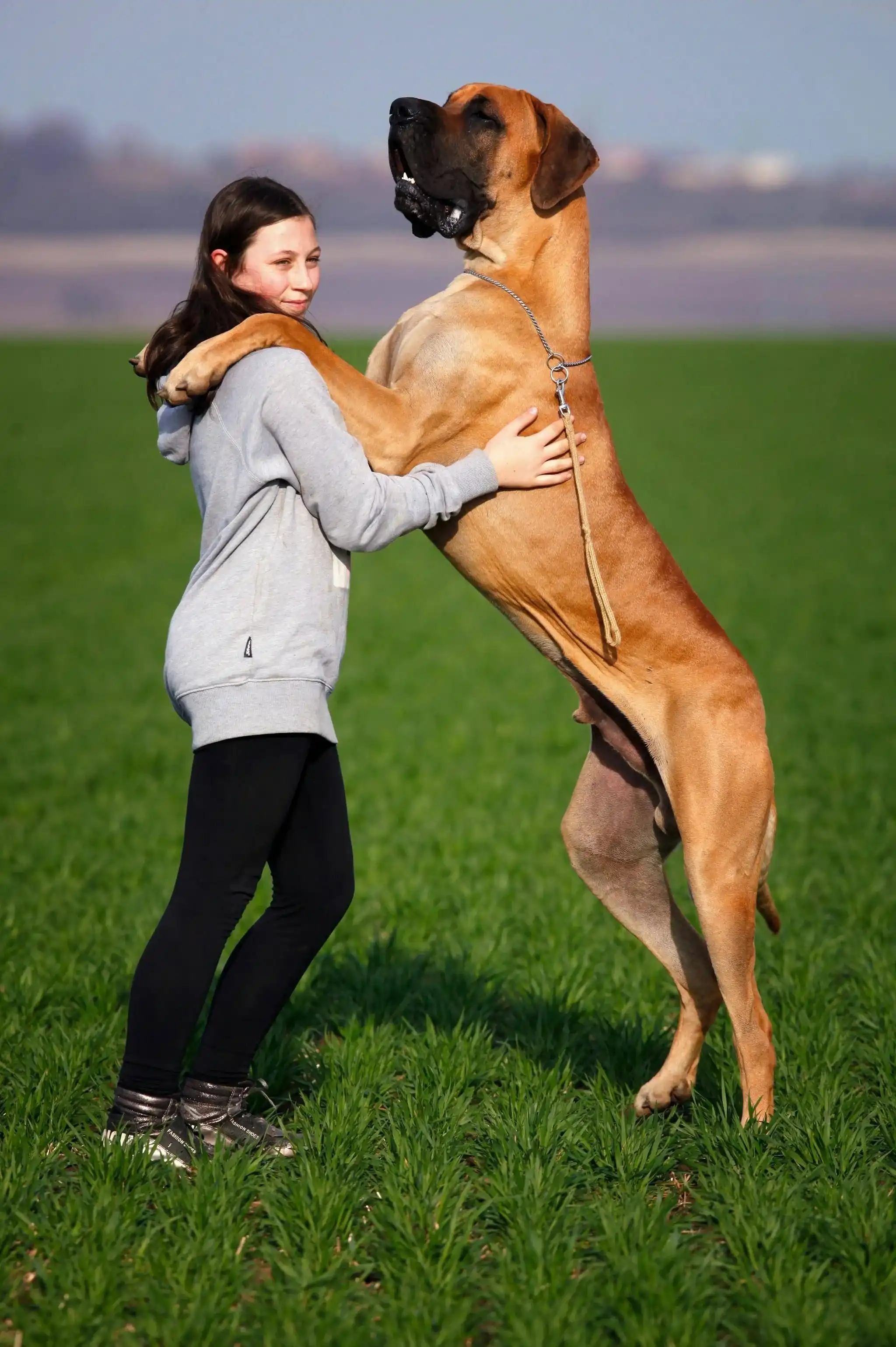
Giant breeds (45–60 minutes/day, low impact): Great Danes, Mastiffs, Saint Bernards, Newfoundlands. Giant breeds are lower energy than their size suggests, but they need consistent, low-impact exercise to maintain muscle mass and joint health. High-impact activities (repetitive jumping, running on hard surfaces) should be limited, particularly in dogs with known joint issues or in growing puppies.
Exercise by Life Stage
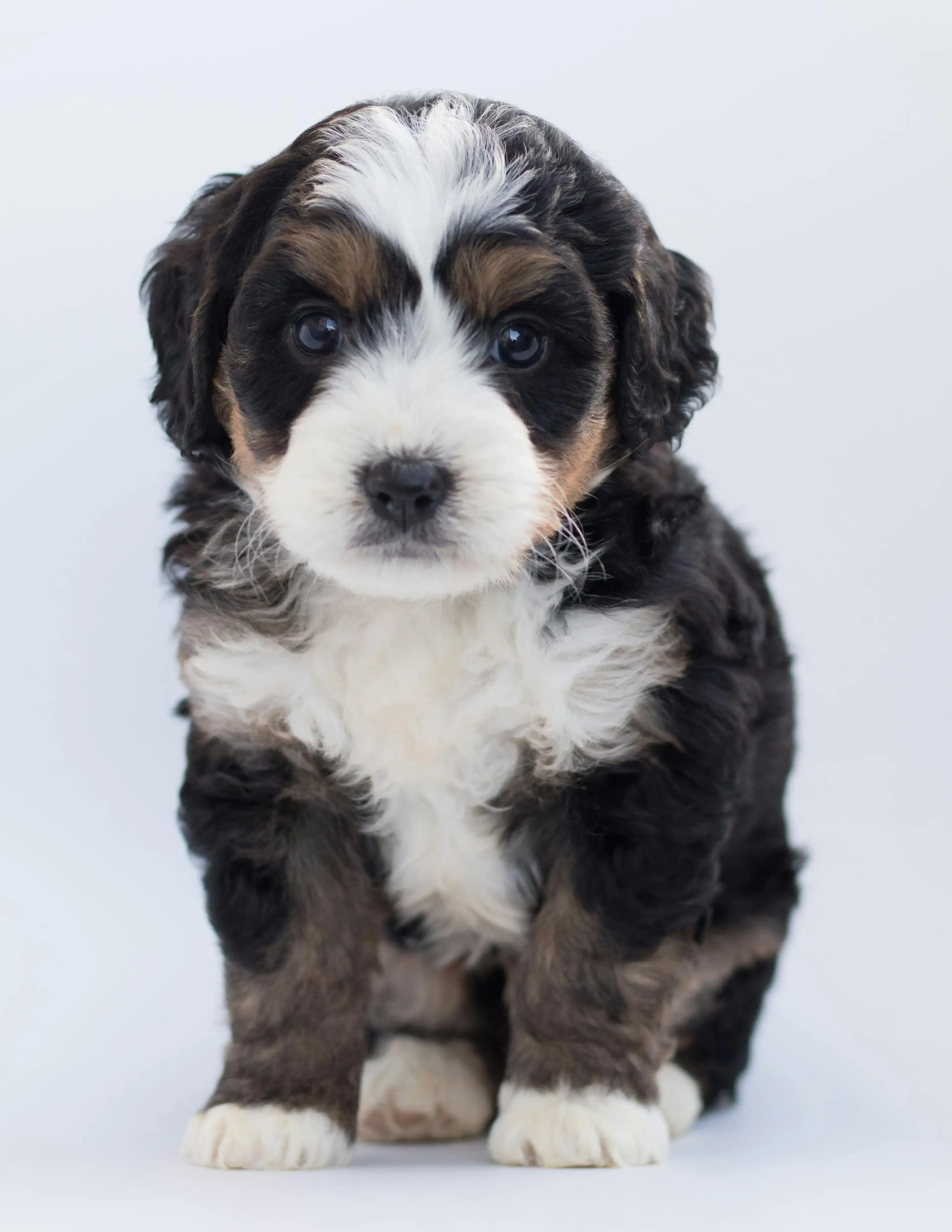
Puppies: Over-exercise in puppies before growth plates close (typically 12–18 months in medium breeds, up to 24 months in large and giant breeds) can cause permanent orthopedic damage. The guideline used by many veterinarians is 5 minutes of formal exercise per month of age, twice daily — a 4-month-old puppy gets two 20-minute sessions. This is a floor, not a ceiling: free play in a safe area, short training sessions, and socialization walks can exceed this, because the concern is repetitive, sustained, high-impact exercise on developing joints, not total activity time. No forced running, long hikes, or jumping until the dog is cleared by a vet post-growth-plate closure.
Adult dogs (1–7 years in most breeds): The breed-group guidelines above apply. Consistency matters more than total volume — two daily walks plus mental enrichment beats one long weekend hike. Dogs who are conditioned gradually to more strenuous exercise (hiking, running) tolerate it well; sudden dramatic increases in activity cause muscle strain and joint stress.
Senior dogs (7+ years, 5+ for giant breeds): Exercise remains important but should shift toward lower-impact activities. Shorter, more frequent walks are better than long ones. Swimming is excellent for arthritic dogs — it maintains cardiovascular fitness and muscle mass without joint impact. Reduce intensity on hot days and watch for increased fatigue or reluctance to continue, which may indicate pain.
Types of Exercise Beyond Walking
Fetch and retrieving: High-intensity burst exercise; excellent for high-drive sporting breeds. Use a ChuckIt! launcher to increase distance and reduce shoulder strain on the thrower. Avoid repetitive fetch on hard surfaces for dogs with orthopedic issues — grass or water fetch is preferable.
Scent work and nose work: Mental exercise that tires dogs faster than physical exercise alone. Any dog can participate regardless of mobility level. Structured nose work classes are available, but simple at-home games (hiding treats in muffin tins under tennis balls, or scattering kibble in grass) provide meaningful mental stimulation with minimal physical demand.
Swimming and hydrotherapy: Ideal for dogs with arthritis, post-surgical recovery, or weight management needs. Canine hydrotherapy (underwater treadmill) is a clinical service offered at rehabilitation veterinary centers. For healthy dogs, a lake, pool, or shallow beach provides an excellent workout. Not all dogs are natural swimmers — introduce water gradually and always supervise.
Agility, flyball, and dog sports: High-intensity activities suitable for fit, high-drive dogs with stable joints. Agility in particular provides both physical and cognitive engagement and is one of the most effective outlets for herding and sporting breeds with high exercise needs. Entry-level agility classes are available through most dog training clubs.
Frequently Asked Questions
How do I know if my dog is getting enough exercise?
A well-exercised dog is calm and relaxed at home, sleeps appropriately for its age, is not destructive, is not hyperactive or difficult to settle, and shows enthusiasm for exercise opportunities without being frantic. Signs of insufficient exercise: destructive chewing, excessive vocalization, hyperactivity that doesn't settle, difficulty focusing during training sessions, and anxiety behaviors. Signs of over-exercise: reluctance to walk, stiffness after rest, limping, excessive fatigue during or after exercise, and heat-related symptoms (excessive panting, drooling, stumbling) in warm weather.
Can I run with my dog?
Yes, with important caveats. Wait until growth plates have closed — this is typically 12–18 months for medium breeds, up to 24 months for large breeds. Start with short runs and build duration gradually (no more than 10% increase per week). Run on soft surfaces (grass, trails) rather than pavement wherever possible. Watch for paw pad abrasion on hot asphalt. Brachycephalic breeds (Pugs, French Bulldogs, Bulldogs) should not run distance due to respiratory anatomy. Most medium and large working/sporting breeds (Huskies, Weimaraners, Labs, German Shepherds) make excellent running partners when properly conditioned.
My dog seems restless and destructive despite daily walks. What am I missing?
Physical exercise and mental stimulation are not interchangeable — many dogs need both. A Border Collie who walks for 2 hours a day may still be destructive because walking satisfies the physical need but not the cognitive need. Add structured training sessions (10–15 minutes, new commands or tricks), scent work games, puzzle feeders, and breed-appropriate enrichment. For herding breeds, an agility or nose work class is often transformative. The "sniff walk" — a walk where you let the dog stop and sniff extensively rather than maintaining pace — is also meaningfully more tiring than a march-pace walk because the olfactory processing is cognitively demanding.
Is a dog park appropriate exercise for my dog?
Dog parks are suitable for some dogs but not all, and they are frequently overestimated as exercise environments. The value depends entirely on the dog's social tolerance and the quality of the dogs present. Off-leash play with compatible dogs is excellent exercise and socialization. However: reactive or fearful dogs should not be in off-leash dog parks (it worsens reactivity); the park's surface and activity level are unpredictable; and poorly socialized dogs can create dangerous situations. A better alternative for dogs who enjoy dog interaction is a structured playdate with one or two known-compatible dogs, which provides social and physical outlet with much lower conflict risk.
Final Thoughts
Exercise needs are one of the most commonly underestimated aspects of dog ownership, particularly for high-drive breeds. The dogs who are a daily struggle to live with — destructive, anxious, hyperactive — are most often simply under-exercised and under-stimulated relative to their breed's needs. Matching exercise type and duration to the individual dog's breed and temperament, rather than to a generic standard, is what produces the calm, content, well-behaved dog most owners are hoping for.
For more on dog care, see our new dog owner checklist and the dog care resource hub.

About the Author
Sarah Eve Pet Care Specialist & Canine Behaviour ConsultantSarah is a certified canine behaviour consultant with a background in veterinary nursing. She has helped thousands of dog owners navigate everything from puppy training to senior dog care, combining clinical knowledge with practical, real-world advice.

✓ Veterinary Reviewed
Dr. Jamshed Bilal, DVM Companion Animals (Cats & Dogs) Anjum Veterinary Clinic — PakistanDr. Jamshed Bilal is a companion animal veterinarian practising at Anjum Veterinary Clinic with hands-on clinical experience in small animal medicine, wellness care, and preventive treatments.
LinkedIn ProfileReviewed for medical accuracy — not a substitute for professional veterinary advice. Learn about our review process.