
Choosing a dog breed is one of the most consequential decisions a pet owner makes, and it's the decision most often made on appearance or trend rather than compatibility. A Border Collie in an apartment with a sedentary owner, a Bulldog in a hot climate, a high-prey-drive Husky in a home with cats — these mismatches are the source of most rehoming and behavioral problems. Breed characteristics are not a guarantee for individual dogs, but they are a statistically reliable starting point for what you'll be managing for the next 10–15 years. The better your lifestyle matches a breed's natural tendencies, the less training and management is required to keep both of you content.
This guide covers the key lifestyle factors that determine breed fit, and maps those factors to the types of breeds most likely to be a good match.
Key Lifestyle Factors for Choosing a Breed
Activity Level
This is the factor that generates the most mismatches. High-energy working breeds — Border Collies, Australian Shepherds, Belgian Malinois, Siberian Huskies, Vizslas — need 2+ hours of vigorous exercise daily plus mental stimulation. "A long walk" does not meet this requirement. These breeds with insufficient exercise develop destructive behavior, excessive vocalization, and anxiety. If you work 9 hours a day and exercise yourself 30 minutes a day, these breeds will make your life miserable and theirs worse.
Low-to-moderate energy breeds — Basset Hounds, Bulldogs, Shih Tzus, Cavalier King Charles Spaniels, Greyhounds (surprisingly calm indoors) — are satisfied with 30–45 minutes of daily exercise and do well in apartments and smaller homes. Medium-energy breeds (Labrador Retrievers, Golden Retrievers, Standard Poodles) fall in the middle: they need consistent daily exercise but don't require the intensity of working dogs.
Living Space
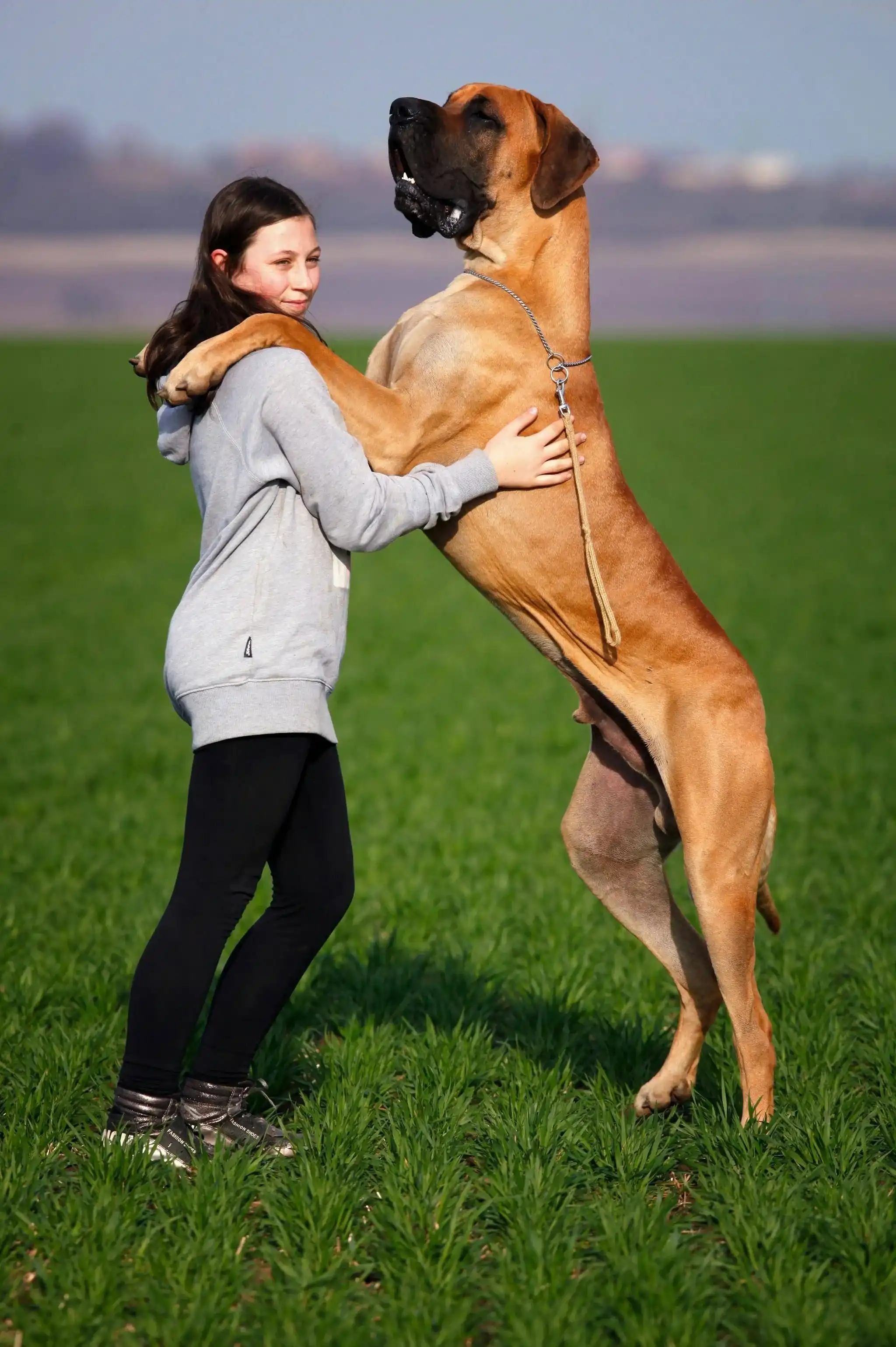
Space matters less than exercise access, but some breeds simply don't thrive in small apartments due to noise levels or size. Giant breeds (Great Danes, Mastiffs) do surprisingly well in apartments because they are low energy, but their sheer size makes logistics more complex. Small terriers (Jack Russell, Rat Terrier) can be high-energy and vocal despite their size, making them more demanding in apartment settings than their footprint suggests.
Experience Level
Some breeds are genuinely not recommended for first-time owners. Chow Chows, Akitas, Belgian Malinois, Cane Corsos, and Rottweilers have strong guarding or protective instincts that require experienced, confident handling and consistent early socialization. Without this, they can develop fear-based or dominance-based aggression that is difficult to rehabilitate. First-time owners do well with breeds selected for trainability and biddability: Labrador Retrievers, Golden Retrievers, Cavalier King Charles Spaniels, Poodles, and Boxers are breeds that forgive mistakes and remain responsive to training even with owners who are learning as they go.
Family Composition
Homes with young children need breeds with documented tolerance for unpredictable handling: Labrador Retrievers, Beagles, Pugs, and Cavaliers consistently rank among the most tolerant of children's behavior. Herding breeds (Australian Shepherds, Collies) may try to "herd" children by nipping at their heels — a behavior that's breed-typical but that requires management. Small dogs with fragile structures (Chihuahuas, toy breeds) are higher risk around young children who may accidentally injure them, triggering a defensive bite.
Homes with cats or other small animals need to account for prey drive: terriers, sighthounds (Greyhounds, Whippets, Salukis), and northern breeds (Huskies, Malamutes) have high prey drive that makes cohabitation with cats and small animals risky regardless of training. Herding breeds and retrievers generally have lower prey drive and coexist more safely.
Grooming Commitment
Long-coated breeds (Afghan Hounds, Maltese, Shih Tzus, Pomeranians) require daily brushing and professional grooming every 6–8 weeks to prevent painful matting. This is a real cost and time commitment over the dog's lifetime. Double-coated breeds (Huskies, Corgis, German Shepherds) shed heavily twice a year and require significant deshedding work during those seasons. If grooming time and budget are limited, short single-coated breeds (Beagles, Weimaraners, Boxers, Greyhounds) are dramatically lower maintenance.
Breed Groups and What They Indicate
Sporting group (Retrievers, Spaniels, Pointers): bred to work with humans all day, highly trainable, generally good with families, need substantial daily exercise. Best for active owners who want a bonded, social dog.
Working group (Mastiffs, Boxers, Dobermans, Rottweilers, Saint Bernards): bred for guarding, pulling, or rescue. Intelligent and loyal but need strong leadership and socialization from early age. Not ideal for first-time owners.
Herding group (Border Collies, Australian Shepherds, German Shepherds, Corgis): bred to work livestock all day using intelligence and high energy. Exceptional trainability but demanding exercise and mental stimulation needs. Not suited for inactive owners.
Terrier group (Jack Russells, Scotties, Bull Terriers, Airedales): bred to hunt and kill vermin, tenacious, independent, often combative with other dogs. High energy in a small package. Require confident owners who appreciate their stubbornness.
Toy group (Chihuahuas, Pomeranians, Maltese, Shih Tzus): bred for companionship. Lower exercise needs, but some have surprisingly big personalities and can be prone to small dog syndrome if boundaries aren't enforced. Fragile structure means they need careful handling.
Hound group (Beagles, Bassets, Greyhounds, Bloodhounds): varied energy levels. Scent hounds (Beagles, Bassets) are notoriously difficult to recall off-leash because their nose overrides everything; sighthounds (Greyhounds, Whippets) are calm indoors but explosive in pursuit of moving objects. Sighthounds need a securely fenced yard.
Purebred vs. Mixed Breed vs. Rescue
Purebred dogs from reputable breeders offer predictability in size, temperament, and health tendencies. Reputable breeders health-test breeding stock for heritable conditions relevant to the breed (hip dysplasia OFA screening in large breeds, cardiac screening in Cavaliers, eye certifications in Collies) and screen buyers to ensure match quality. Avoid "designer" breeders and puppy mills that prioritize novelty over health.
Mixed breeds from shelters are often excellent dogs with hybrid vigor, though temperament and size predictability is lower. Adult shelter dogs can be assessed for temperament directly — what you see is what you get — which removes some of the uncertainty of puppyhood. DNA testing (Embark, Wisdom Panel) can give insight into a mixed breed's likely behavioral tendencies, though expression varies considerably from the breed composition.
Frequently Asked Questions
What is the best dog breed for first-time owners?
Labrador Retrievers and Golden Retrievers are consistently recommended for first-time owners because of their combination of trainability, forgiving temperament, good health documentation, and social nature. Standard Poodles offer the same trainability with less shedding. Cavalier King Charles Spaniels are excellent for lower-activity households but require awareness of breed-specific health issues (mitral valve disease is endemic in the breed by age 5 in most lines). Avoid guarding breeds, working breeds with strong independence, and terriers for first-time owners — not because they are worse dogs, but because they require more experience to manage well.
How much does it cost to own a dog per year?
Annual costs vary significantly by size, health, and location. A rough breakdown for a medium-sized dog in the US: food $500–$1,500, routine veterinary care (annual exam, vaccines, parasite prevention) $400–$700, grooming (short-coated dogs) $0–$300 / long-coated breeds $500–$1,200, training classes $200–$600 for the first year, accessories and toys $200–$400. Pet insurance is $400–$1,200 per year depending on coverage level and deductible but can prevent catastrophic out-of-pocket costs for emergencies. First-year costs are typically $2,000–$4,000 higher than subsequent years due to puppy setup, spay/neuter, and initial vaccination series.
Is it better to get a puppy or an adult dog?
Adult dogs are underrated. A puppy requires 2+ hours of active management daily for the first several months — housetraining, socialization, bite inhibition training, crate training, preventing destructive behavior. Adult dogs from responsible rescues are often already housetrained, have known temperament, and skip the most labor-intensive developmental period. Puppies allow you to shape socialization from the ground up, which matters most for breeds where early experience has a large impact on adult behavior (guarding breeds, working breeds). For most family situations, an adult dog of 1–3 years is the best combination of predictability and adaptability.
What questions should I ask a breeder before buying a puppy?
Key questions: What health testing has been done on both parents, and can I see the certificates? (OFA, CERF, cardiac clearances appropriate for the breed.) How many litters does the breeding female produce per year? (More than one litter per year from the same female is a red flag.) Can I visit the premises and meet the dam? (Reputable breeders welcome this; puppy mills and backyard breeders often won't allow it.) Do you take back dogs who can't be kept for any reason? (Responsible breeders require this commitment.) What behavioral and health guarantees are in the contract? A breeder who can't or won't answer these questions with documentation is not someone whose dogs you want to buy.
Final Thoughts
The best dog for you is the one whose natural tendencies align with your actual daily life — not your aspirational daily life. Most behavioral problems in dogs stem from a mismatch between breed characteristics and owner lifestyle, not from the dog being "bad." Spending an hour matching your lifestyle to a breed before committing to a dog prevents years of struggle for both of you.
For resources on bringing your new dog home successfully, see our new dog owner checklist and the full dog care resource hub.