
Cat Body Language Guide: What Your Cat Is Telling You
Reviewed by Dr. Ameer Hamza, DVM
Cats communicate constantly. They communicate with their tails, their ears, their eyes, their whiskers, their posture, their vocalisations, their scent, and dozens of subtle micro-signals that most human owners miss entirely. Cats evolved as both predator and prey, and their communication system reflects this dual nature — it is nuanced, context-dependent, and often misread by people applying dog or human communication frameworks. This guide decodes the full vocabulary of cat body language so you can understand what your cat is telling you at every moment.
Tail Position and Movement
The tail is the most visible and readable body language channel in cats. Tail held fully upright and vertical is one of the clearest positive signals a cat uses — it is the greeting posture, used when approaching a familiar, liked individual (human or cat). A tail held high with a slight hook at the tip adds a note of friendly curiosity or excitement to that positive greeting. A tail held low or tucked between the legs signals fear, submission, or discomfort — the cat is making themselves appear smaller and withdrawing their tail from potential contact. A fully puffed tail with erect fur (piloerection) indicates high fear or high arousal — the cat is attempting to appear physically larger as a defensive display. Rapid side-to-side tail lashing — often misread as the friendly wagging of a dog's tail — actually signals irritation, high arousal, or intense predatory focus. This is a warning that the cat's patience is running out or that they are overwhelmed by stimulation. A slow, lazy tail sway during rest simply indicates a relaxed, lightly engaged state.
Ear Position
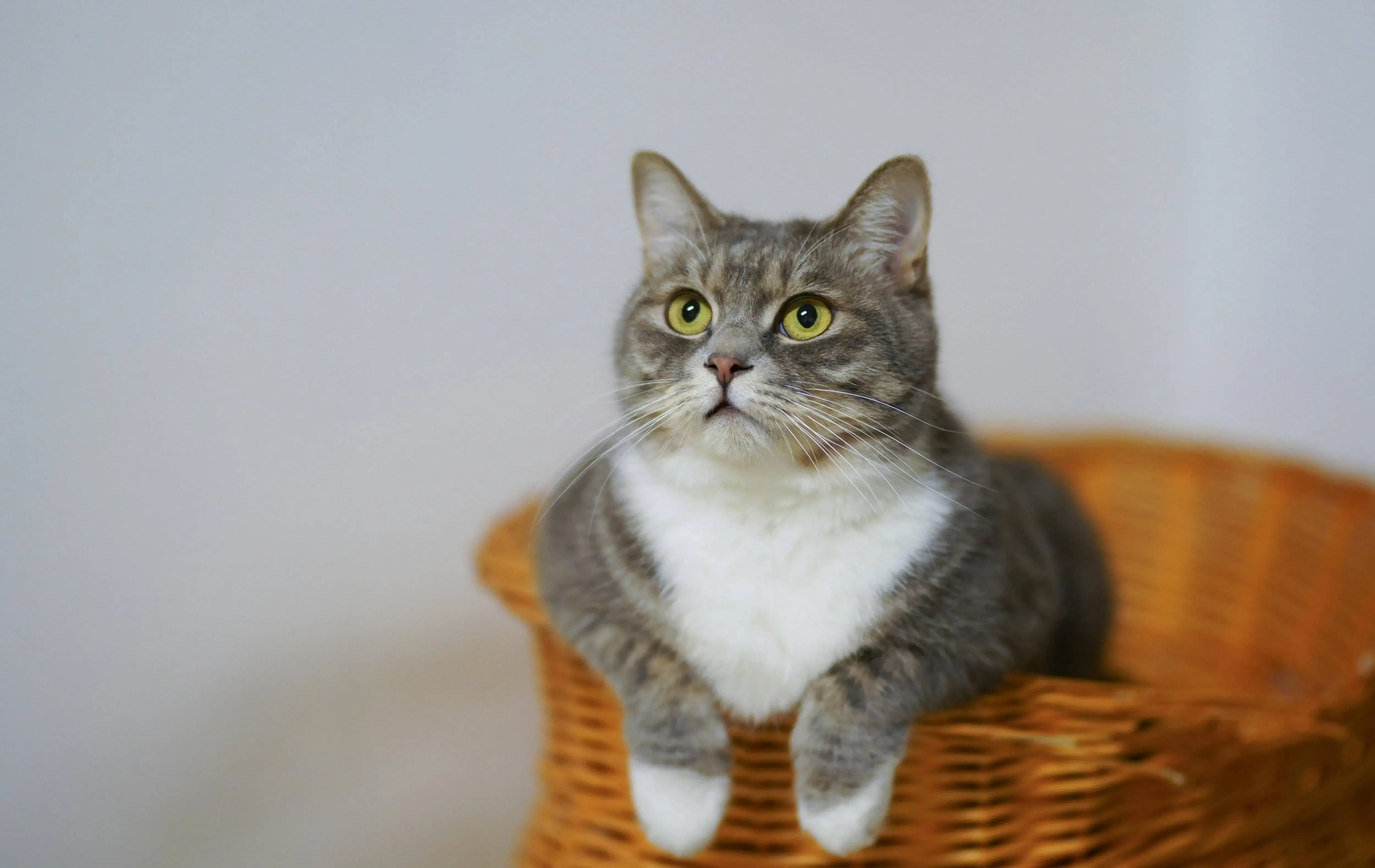
Cat ears are extraordinarily mobile — they can rotate nearly 180 degrees and move independently — and they broadcast emotional state continuously. Ears forward and slightly angled outward (the neutral, relaxed position) indicate a calm, comfortable cat. Ears pricked fully forward signal alertness and focused interest — the cat is attending closely to something in the environment. Ears swivelled sideways and flattened outward (the "airplane ears" or "aeroplane ears" position) are a key early warning signal of anxiety, irritation, or overstimulation — this is the cat saying they are approaching their threshold. Ears fully flattened against the skull signal extreme fear or defensive aggression — a cat in this state is at serious risk of biting or scratching if the stressor is not removed. Always respect flattened ears as a stop signal.
Eye Signals
Soft, half-lidded eyes in a relaxed cat signal contentment and comfort. Slow blinking — where the cat holds your gaze and then closes their eyes slowly — is a trust signal, sometimes called a cat kiss. Research has confirmed that cats will slow blink back at humans who slow blink at them, suggesting it functions as a genuine affiliative communication. Fully dilated pupils in normal lighting indicate high arousal — this could be excitement, fear, or aggression depending on context. Fully constricted pupils in bright light is normal; in dim light with a tense posture, it can indicate offensive arousal. Direct, unblinking stare from a cat is a dominance or threat signal — in feline social communication, prolonged eye contact without blinking is a challenge. Averting your gaze communicates non-threat; staring back can escalate tension.
Whisker Position
Whiskers are not just sensory organs — they are also body language signals. Whiskers fanned forward and slightly spread indicate interest and positive engagement — the cat is reaching toward something with their sensory array. Whiskers pulled back flat against the face are a fear signal, paired with other retreat or defensive postures. Whiskers held neutrally to the sides indicate a relaxed, unstimulated state. Whisker position is most readable in combination with ear and eye signals — it rarely tells a story on its own.
Posture and Body Position
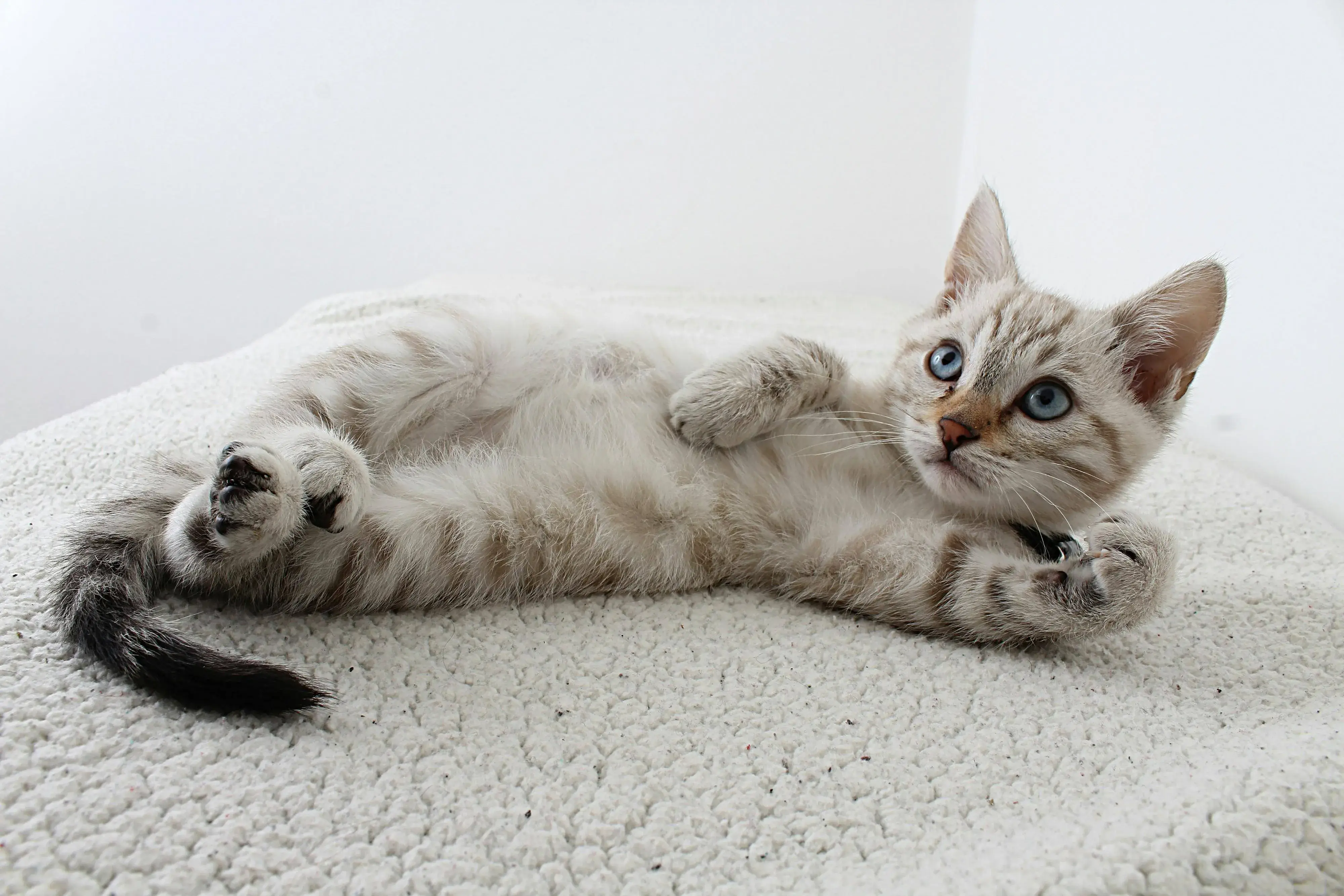
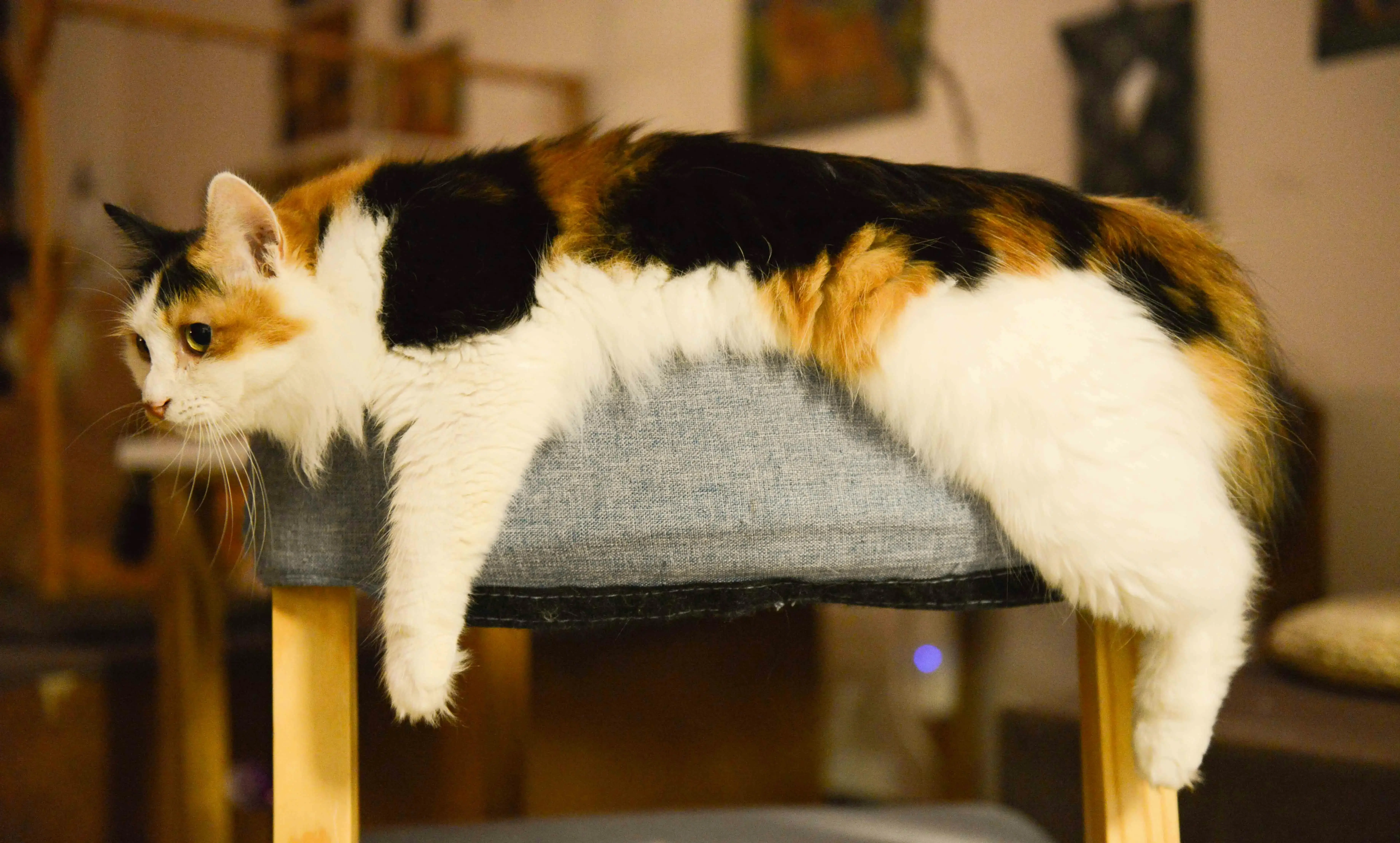
Relaxed, lying stretched out on one side or back: complete comfort and safety — the cat is exposing their most vulnerable body areas. Belly-up with legs partially tucked: trust display, but not necessarily an invitation to touch. Crouched low with weight over hindquarters: ready to flee or spring; the cat is prepared to move quickly. Arched back with piloerection: classic fear/threat display, the cat is attempting to appear larger. Head lowered with body weight shifted back: defensive posture indicating the cat feels threatened. Bunting (rubbing cheek or forehead on you): affiliation and scent-marking, a strong social bond signal. Kneading: comfort and contentment, a behaviour retained from kittenhood nursing.
Vocalisation Guide
Meow: Used almost exclusively with humans; adult cats rarely meow to other cats. It is a flexible sound that cats adapt to communicate a range of requests and responses to humans. Purr: Most commonly associated with contentment, but cats also purr when stressed, in pain, or when trying to self-soothe. The context matters. Trill or chirp: Short, musical rolling sound used in positive social greetings. Chattering/chittering: The clicking, chattering sound cats make watching inaccessible prey — predatory arousal and frustration. Hiss: Direct warning signal — the cat is frightened or threatened and ready to defend themselves. Growl: Low, continuous warning signal indicating the cat is prepared to act if the threat continues. Yowl: Loud, drawn-out vocalisation associated with distress, territorial disputes between unspayed/unneutered cats, or disorientation in elderly cats (cognitive dysfunction). Chatter in greeting: Some cats produce a rapid, soft chattering sound when greeting a liked human — this is distinct from predatory chattering and appears to be a form of excited social communication.
Reading Multiple Signals Together
No single body language signal tells a complete story in isolation. A purring cat with flattened ears is not a happy cat — the purr may indicate stress or pain while the ears clearly signal discomfort. A cat with a raised tail who is also growling is giving conflicting signals that indicate a complex emotional state, possibly a defensive cat that has been cornered. Always read the whole animal: tail, ears, eyes, whiskers, posture, and vocalisation together tell a far more accurate story than any single signal alone.
Frequently Asked Questions
What does it mean when a cat slow blinks at you?
It is a trust and relaxation signal, sometimes called a cat kiss. Research confirms cats respond positively to human slow blinks. Slow blink back to communicate safety and friendliness.
Why does my cat show their belly but bite when I touch it?
Belly exposure signals trust, not an invitation to touch. The belly is highly sensitive and touching it triggers an involuntary defensive response in most cats. Appreciate the display without touching unless your specific cat has shown they welcome it.
What does a cat's tail position communicate?
Tail high = confidence/friendly greeting. Tail low = fear/discomfort. Tail puffed = high arousal or fear. Rapid lashing = irritation or predatory focus. Tail wrapped around you = social bonding.
What does it mean when a cat kneads?
Kneading is a comfort behaviour retained from kittenhood nursing, associated with relaxed contentment. It is a positive sign of bonding and emotional safety.
Why does my cat chatter or trill?
Trilling is a friendly greeting sound. Chattering is predatory arousal when watching inaccessible prey. Neither signals distress — both are normal forms of feline communication.
For more on cat behaviour, see our guide on cat anxiety signs and causes and the complete cat care guide.
Disclaimer: This article is for educational purposes only and does not constitute veterinary advice. If your cat shows sudden changes in behaviour, consult a licensed veterinarian to rule out medical causes.
For a full overview of cat health, nutrition, behaviour, and grooming, see the complete cat care guide.

About the Author
Reena Scot Pet Care Expert & Certified Feline SpecialistReena has over a decade of experience in feline health, behaviour, and nutrition. She has worked with animal shelters, veterinary clinics, and cat adoption programmes, helping owners make informed decisions about care, diet, and long-term wellness for their cats.

✓ Veterinary Reviewed
Dr. Ameer Hamza, DVM Companion Animals (Cats, Dogs, Birds, Fish) Manj Pets & Veterinary Clinic — Lahore, PakistanDr. Ameer Hamza is a Lahore-based veterinarian practising at Manj Pets & Veterinary Clinic. He specialises in companion animal care including preventive health, nutrition, and clinical treatment for cats and dogs.
LinkedIn ProfileReviewed for medical accuracy — not a substitute for professional veterinary advice. Learn about our review process.