
Norwegian Forest Cat Breed Guide: History, Care and Temperament
Reviewed by Dr. Ameer Hamza, DVM
The Norwegian Forest Cat — known as the Norsk Skogkatt in its homeland — is a large, magnificently-coated cat breed that has lived alongside Scandinavian people for centuries, surviving harsh Nordic winters through natural selection for a thick, water-resistant coat and a robust, self-sufficient temperament. Today they are one of the most popular cat breeds in Scandinavia and increasingly popular worldwide. This guide covers their history, personality, grooming requirements, health conditions, and how to decide if this breed is right for you.
Origins and History
The Norwegian Forest Cat has a long history in Scandinavia — cats matching their description appear in Norwegian folk tales and mythology dating back centuries. They are believed to have developed naturally in Norway's forests over many generations, with natural selection favouring the thick double coat, tufted ears, large paws (ideal for walking on snow), and climbing ability. They served as working cats on Norwegian farms, prized for their hunting ability. The breed was nearly lost in the 20th century through crossing with other cats, but was restored and formally recognised by Fédération Internationale Féline (FIFé) in 1977. Norwegian King Olaf V officially declared them Norway's national cat.
Physical Characteristics
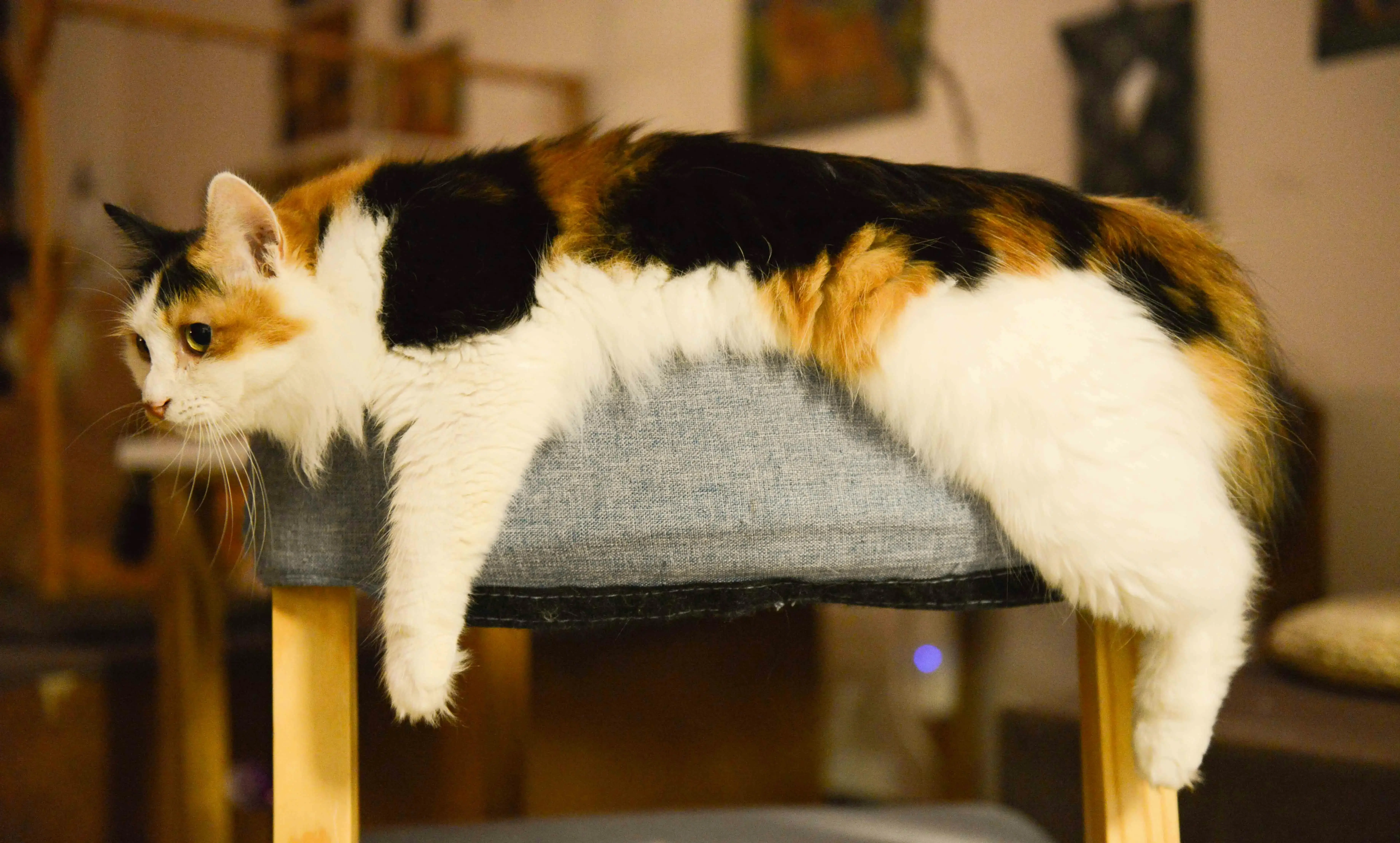
Norwegian Forest Cats are large to very large — males typically weigh 5–8 kg, females 3.5–5.5 kg. Their body is long and muscular with strong hindquarters built for climbing. The head is distinctly triangular when viewed from the front, with a straight profile from forehead to nose tip. The ears are large, triangular, and heavily tufted inside and on the tips — the lynx-like ear tufts are a signature feature. Eyes are almond-shaped and can be any colour from gold to green to blue (blue most commonly in white cats). The tail is long and very bushy. The coat has two components: a dense, woolly, water-resistant undercoat and a longer, slightly coarser top coat with a distinctive ruff around the neck, a bib on the chest, and "knickerbockers" of longer fur on the hind legs. All colours and patterns are accepted. They are slow-maturing, not reaching full size until around four or five years.
Personality and Temperament
Norwegian Forest Cats are gentle, confident, and adaptable. They form strong bonds with their families and enjoy company but without being clingy or demanding — they seek proximity on their own terms. They are playful and remain engaged with toys and activity throughout their adult lives; they are excellent climbers and will use every vertical surface available. They are generally sociable with visitors (though some are more reserved than others) and tend to coexist well with other cats and dogs when introduced properly. They are calm enough for family life and robust enough to handle the activity of children, though they are not as tolerant of persistent handling as Ragdolls. They are not particularly vocal.
Grooming
The double coat requires regular maintenance. During most of the year, two to four brushing sessions per week with a wide-tooth comb are sufficient to keep the coat in good condition. Spring brings heavy shedding as the thick undercoat is replaced — daily brushing during this period prevents the undercoat from matting into dense clumps. The coat is somewhat self-maintaining compared to Persian-type coats, with less tendency to mat in dry conditions, but damp weather can cause matting in the undercoat if it is not brushed regularly. The armpits, groin, and collar area are the most mat-prone zones. Occasional professional bathing and blow-drying is beneficial during heavy shedding periods.
Health
Glycogen storage disease type IV (GSD IV) is a hereditary metabolic disease specific to Norwegian Forest Cats and certain related breeds. It is rare but serious — affected kittens show neuromuscular signs and typically do not survive. DNA testing is available and responsible breeders test all breeding cats. Hypertrophic cardiomyopathy (HCM) occurs in the breed and cardiac screening with echocardiography is recommended. Always purchase from breeders who provide written evidence of health testing.
Frequently Asked Questions
What is the Norwegian Forest Cat's personality?
Gentle, confident, adaptable, and affectionate without being demanding. Playful, good with children and other pets, and self-sufficient during normal absences.
How much grooming do they need?
Two to four times weekly year-round; daily brushing during spring shedding. Wide-tooth comb is essential for the undercoat.
Are they the same as Maine Coons?
No — distinct breeds. Norwegian Forest Cats have a triangular head and straight nose profile; Maine Coons have a rectangular muzzle. Both are large, semi-longhaired, and sociable.
What health problems do they have?
Glycogen storage disease type IV (DNA test available) and HCM. Buy only from breeders with health testing documentation.
Do they need outdoor access?
They adapt well to indoor life with adequate enrichment, cat trees, and window views. A catio enriches their environment without the risks of free roaming.
For more cat breed comparisons, see our Ragdoll vs Maine Coon guide and the complete cat care guide.
Disclaimer: This article is for educational purposes only. Always verify breeder health testing documentation. Individual cat temperament varies — meet the cat before adopting.
For a full overview of cat health, nutrition, behaviour, and grooming, see the complete cat care guide.

About the Author
Reena Scot Pet Care Expert & Certified Feline SpecialistReena has over a decade of experience in feline health, behaviour, and nutrition. She has worked with animal shelters, veterinary clinics, and cat adoption programmes, helping owners make informed decisions about care, diet, and long-term wellness for their cats.

✓ Veterinary Reviewed
Dr. Ameer Hamza, DVM Companion Animals (Cats, Dogs, Birds, Fish) Manj Pets & Veterinary Clinic — Lahore, PakistanDr. Ameer Hamza is a Lahore-based veterinarian practising at Manj Pets & Veterinary Clinic. He specialises in companion animal care including preventive health, nutrition, and clinical treatment for cats and dogs.
LinkedIn ProfileReviewed for medical accuracy — not a substitute for professional veterinary advice. Learn about our review process.