
Turkish Angora Cat Breed Guide: History, Personality and Care
Reviewed by Dr. Ameer Hamza, DVM
The Turkish Angora is one of the world's oldest recognised cat breeds, originating naturally in the Ankara region of Turkey over many centuries. Unlike breeds developed through selective hybridisation, the Angora developed naturally in the mountainous regions of central Turkey, where their fine, silky coat offered protection from cold without the heavy double-coat burden of other cold-climate breeds. They are among the most athletic and intelligent cat breeds, with an active personality that rewards engaged, interactive ownership. This guide covers their history, temperament, grooming requirements, health considerations, and practical care.
Origins and History
Turkish Angoras are believed to have originated in the Ankara (historically Angora) region of Turkey, from where they spread to Europe through traders and explorers from the 16th century onwards. They were highly prized in 17th and 18th century Europe and were the dominant longhaired cat breed before the Persian's rise to popularity in the 19th and 20th centuries. As Persians became popular, the Angora breed was neglected and nearly lost outside Turkey. The Ankara Zoo in Turkey maintained a breeding programme that preserved the breed, and Turkish Angoras were re-exported to the United States in the 1960s to re-establish the breed internationally. Today, Turkish Angoras are recognised by all major cat fancy organisations.
Physical Characteristics
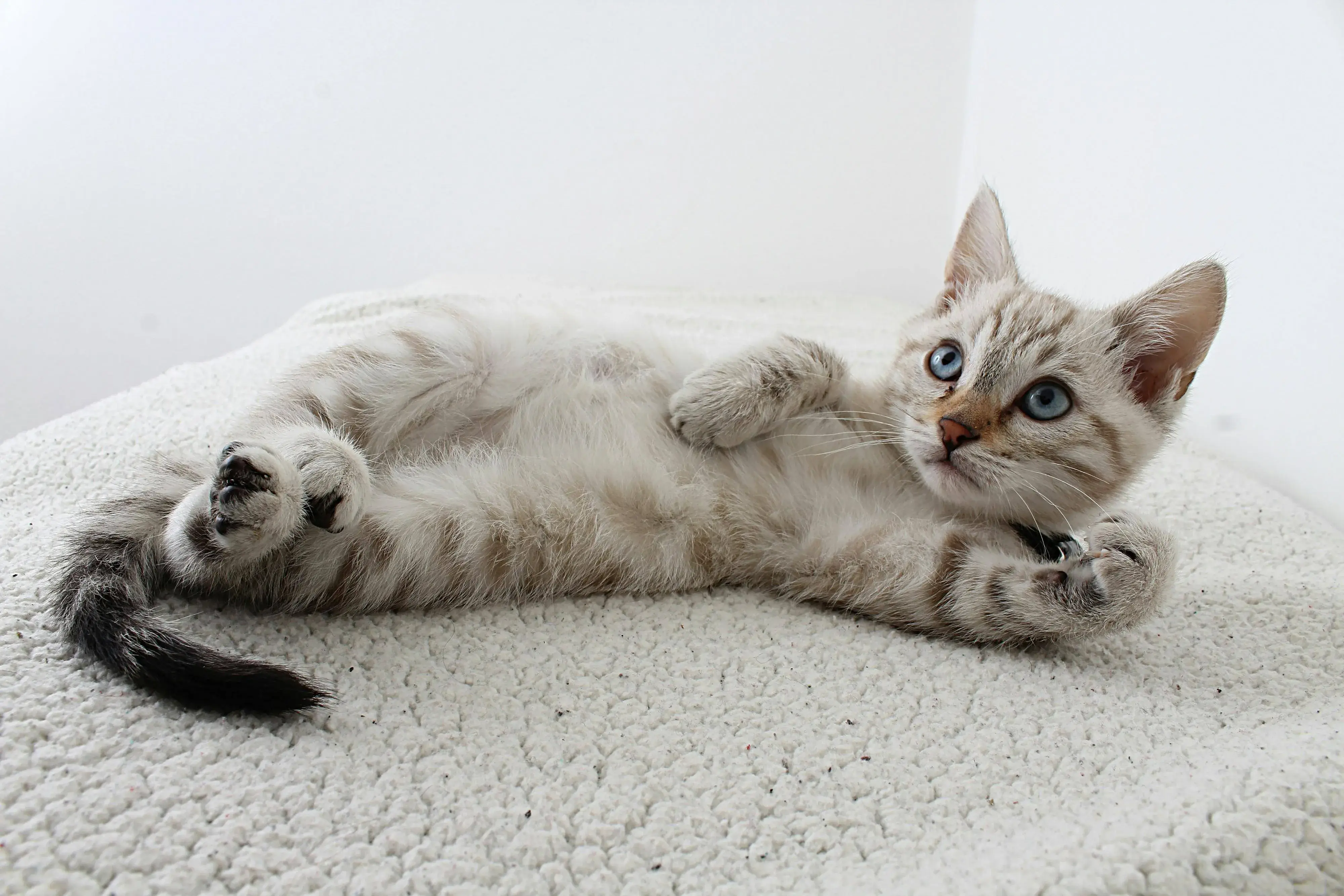
The Turkish Angora has a medium-sized, slender, athletic body with a fine bone structure — graceful and light-footed rather than heavy and solid. The head is a small to medium wedge with a moderate profile (not flat like a Persian). The ears are tall, pointed, and upright, often with small ear tufts. Eyes are almond-shaped and can be any colour including odd-eyed (two different coloured eyes), which is particularly associated with white Turkish Angoras. The tail is long and plume-like, carried erect and flowing. The coat is single-layer — no dense undercoat — with a silky texture that flows and shimmers with movement. White is the traditional colour and most associated with the breed, but Turkish Angoras come in a very wide range of colours and patterns.
Personality and Temperament
Turkish Angoras are active, intelligent, and highly engaged with their environment. They are playful, quick to learn, and curious about everything. Unlike more sedentary breeds, they maintain their kitten-like playfulness well into adulthood and can become destructive if under-stimulated. They are affectionate with their family but on their own terms — they approach for interaction when they want it rather than being endlessly passive lap cats. They are confident with visitors and adapt well to varied household environments. They are assertive — in multi-cat households they tend to be toward the top of the social hierarchy rather than yielding. Interactive play, puzzle feeders, and environmental enrichment are essential to their welfare.
Grooming
The single-layer coat is the Turkish Angora's low-maintenance advantage. Without the dense undercoat of breeds like Persians, Norwegian Forest Cats, or Maine Coons, the coat is far less prone to matting. Brushing two to three times per week with a soft bristle brush or wide-tooth comb maintains the coat and manages shedding. During spring, shedding increases temporarily and more frequent brushing prevents loose hair from depositing heavily around the home. Monthly bathing is optional — the silky coat does not develop the oil build-up of hairless breeds — but a periodic bath can enhance the coat's natural sheen. Nail trimming every 2–3 weeks and dental hygiene as part of the standard routine.
Health
The hereditary ataxia documented in some Turkish Angora lines is a neurological condition causing progressive incoordination. It is most associated with certain white cat lines. White Turkish Angoras with blue eyes have an elevated risk of congenital deafness (BAER testing in kittens confirms auditory status). HCM has been reported. Responsible breeders screen for HCM by echocardiography and BAER test white kittens for deafness. Ask for written documentation of health testing.
Frequently Asked Questions
What is the Turkish Angora's personality like?
Active, intelligent, playful, and affectionate on their own terms. They engage with everything in their environment and do best with regular interaction and enrichment.
Is the coat high maintenance?
Lower than most semi-longhaired breeds — the single-layer coat does not mat readily. Two to three times weekly brushing is sufficient.
What health problems do they have?
Hereditary ataxia in some lines, congenital deafness in white/blue-eyed individuals, and HCM. Buy from breeders with BAER and cardiac screening documentation.
Are they good with children and other pets?
Good with older, respectful children. Can be assertive in multi-cat households. High prey drive — caution with small pets.
What is the difference between a Turkish Angora and a Persian?
Completely different breeds. Turkish Angoras are athletic and single-coated with a moderate head. Persians are stocky, flat-faced, dense double-coated, and less active.
For more cat breed guides, see our best cat breeds for families and the complete cat care guide.
Disclaimer: This article is for educational purposes only. Always verify breeder health testing documentation before purchasing any pedigree cat.
For a full overview of cat health, nutrition, behaviour, and grooming, see the complete cat care guide.

About the Author
Reena Scot Pet Care Expert & Certified Feline SpecialistReena has over a decade of experience in feline health, behaviour, and nutrition. She has worked with animal shelters, veterinary clinics, and cat adoption programmes, helping owners make informed decisions about care, diet, and long-term wellness for their cats.

✓ Veterinary Reviewed
Dr. Ameer Hamza, DVM Companion Animals (Cats, Dogs, Birds, Fish) Manj Pets & Veterinary Clinic — Lahore, PakistanDr. Ameer Hamza is a Lahore-based veterinarian practising at Manj Pets & Veterinary Clinic. He specialises in companion animal care including preventive health, nutrition, and clinical treatment for cats and dogs.
LinkedIn ProfileReviewed for medical accuracy — not a substitute for professional veterinary advice. Learn about our review process.