
Why Does My Cat Purr So Much? What It Really Means
Reviewed by Dr. Ameer Hamza, DVM
Most people assume a purring cat is a happy cat, and most of the time that assumption is correct — but it is not the whole story. Cats purr for at least seven distinct reasons, and some of them have nothing to do with contentment. Understanding what your cat's purring is actually communicating can help you pick up on distress signals that might otherwise be missed entirely.
How Do Cats Purr? The Mechanics Explained
The mechanics of purring are more complex than most people realise, and for a long time they were poorly understood. Cats purr using the laryngeal muscles in their throat, which rapidly dilate and constrict the glottis — the part of the larynx that surrounds the vocal cords — as the cat breathes both in and out. This creates the characteristic intermittent airflow that produces the purring sound on inhalation and exhalation alike, which is what makes a cat's purr continuous rather than breath-dependent like most vocalisations.
Purring occurs at frequencies between approximately 25 and 150 Hz, with domestic cats typically purring in the range of 25–50 Hz. This frequency range is particularly noteworthy because it overlaps with therapeutic vibration ranges used in medical research to promote bone healing, reduce inflammation, and improve muscle recovery. Not all members of the cat family can purr — lions, tigers, leopards, and jaguars roar instead because they have a different laryngeal anatomy. Cheetahs, however, purr like domestic cats, which gives some insight into the evolutionary branching of these vocalisations.
7 Reasons Cats Purr
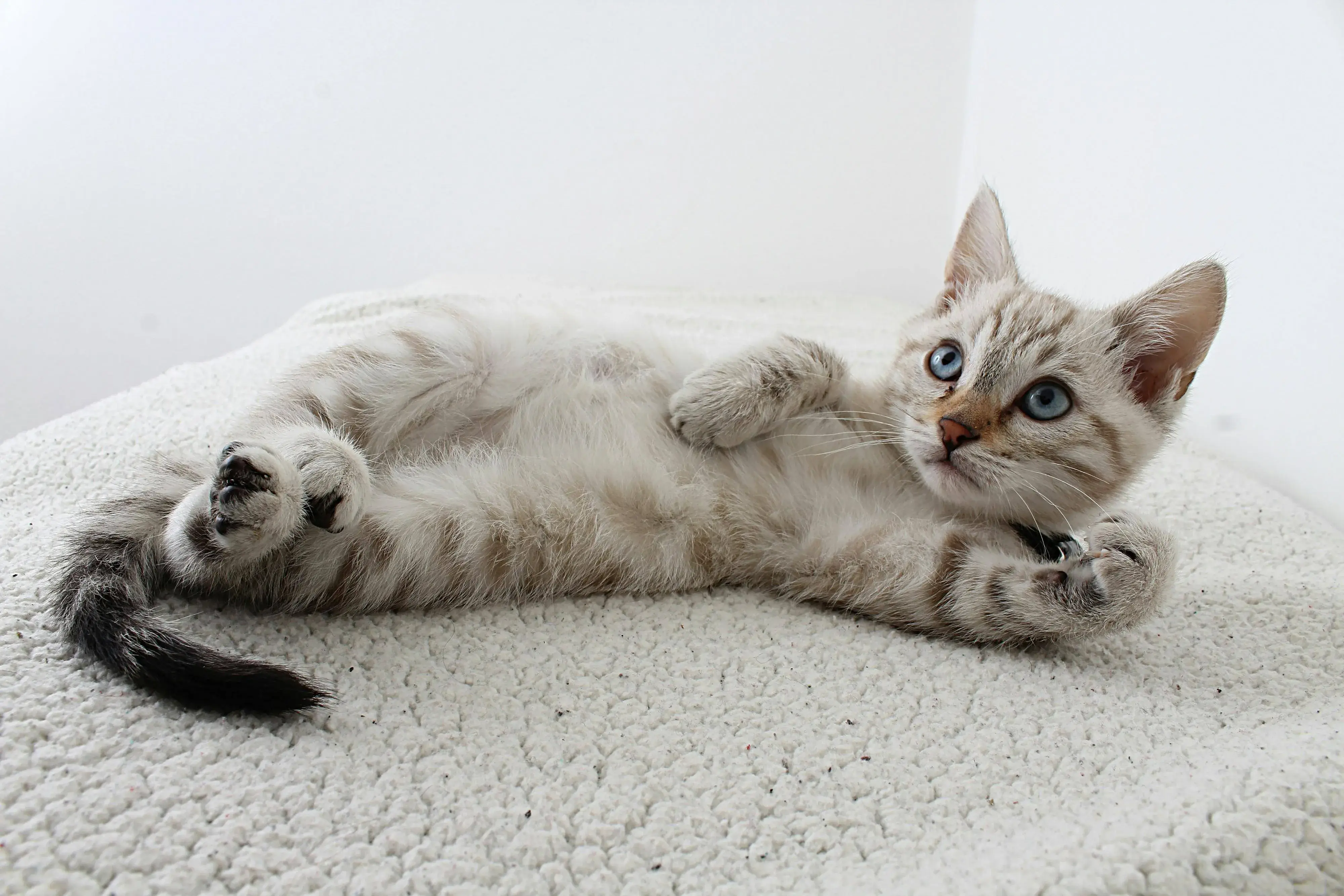
Contentment and happiness is the most familiar reason and genuinely is the most common one in well-cared-for pet cats. A cat purring while being stroked, curled up in a warm spot, or sitting beside someone it trusts is almost certainly expressing comfort and satisfaction. The body language accompanying this purr is relaxed: slow blinking, a loose and still tail, soft facial muscles, and a general absence of tension anywhere in the body.
Self-soothing when anxious or stressed is a less well-known but significant reason cats purr. When placed in a stressful situation — a car journey, a vet visit, loud noises, or an unfamiliar environment — many cats will purr as a coping mechanism. The vibration appears to have a physiological calming effect, almost like a self-generated form of comfort. This is why cats at the vet sometimes purr throughout the consultation despite clearly being nervous.
Pain and illness is perhaps the most important reason for owners to understand. Cats purr when they are unwell, injured, or in pain, and this is a genuine source of missed diagnoses. A cat that is very still, not eating, and purring continuously may actually be in significant discomfort and using purring to try to manage it. The purr of a sick or painful cat often has a slightly different quality — lower, more persistent, less variable — but even experienced owners can find it hard to distinguish from a contented purr without also observing the full picture of the cat's behaviour and physical state.
Hunger and solicitation purring is a specific variant of purring that cats use when they want food. Research by Dr Karen McComb at the University of Sussex identified a distinct type of purr that cats produce when they are soliciting feeding — it contains an embedded higher-frequency cry that activates the human caretaking instinct more powerfully than a regular purr. Owners who live with their cats tend to find this solicitation purr slightly more urgent or harder to ignore than ordinary purring, even if they cannot consciously explain why.
Healing and bone density maintenance is an emerging area of feline biology. Vibrations in the 25–50 Hz frequency range have been shown to stimulate bone formation and healing in laboratory settings, and some researchers believe cats may have evolved purring partly as a low-energy way to maintain bone and muscle condition during the long periods of rest that make up so much of a cat's day. This hypothesis also offers a potential explanation for the well-documented observation that cats often recover from bone injuries faster than many other animals of comparable size.
Bonding with owners and social communication is another layer of purring's function. Cats purr when interacting with humans they are attached to, and the purr appears to serve as both an expression of that bond and an invitation to continue the interaction. Mother cats purr while nursing kittens, and kittens begin purring within days of birth — this early purring communicates to the mother that the kittens are content and feeding well.
Giving birth or nursing kittens forms the original context for purring in domestic cats. Queens purr throughout labour, which is thought to help manage pain and maintain calm. Kittens purr while nursing, which signals to the mother that they are content and allows the mother to purr back, creating a feedback loop of mutual reassurance. This nursing-origin explains why purring is so deeply embedded in the cat's social toolkit.
How to Tell Happy Purring From Pain Purring
Context is the most reliable guide to interpreting your cat's purring. A cat that is purring while in its usual spots, eating normally, grooming, interacting with you, and showing no physical changes is almost certainly content. A cat that is purring but has stopped eating, is unusually still, is hiding, seems reluctant to move, or has any visible physical changes such as swelling, wounds, or discharge, should be assessed as potentially unwell rather than reassured by the purring.
Body language is the second key indicator. A happy-purring cat will have a loose, relaxed body, a gently curling or still tail, slow-blinking eyes, and soft facial muscles. A cat purring in distress will often have a tense, hunched posture, tucked paws, flattened or sideways ears, wide or slow-blinking eyes with dilated pupils, and a general quality of stillness that reads as withdrawal rather than relaxation. Paying attention to the whole cat rather than just the sound it is making is what separates informed owners from those who genuinely miss signs of illness.
When Excessive Purring Is a Warning Sign
A sudden change in purring frequency or character — a cat that has never been much of a purrer suddenly purring constantly, or a cat whose purring has taken on a different quality — is worth noting. When excessive purring occurs alongside any of the following, veterinary attention is warranted: reduced or absent appetite, weight loss, lethargy, hiding, vomiting, changes in litter box use, any breathing difficulty, or obvious signs of pain on handling. Conditions such as hyperthyroidism in older cats can also cause increased vocalisation including purring, and this is a treatable condition if caught early.
Interesting Facts About Cat Purring
Domestic cats are not the only small felids that purr — cheetahs, ocelots, bobcats, and several other small wild cat species also produce continuous purrs on both inhalation and exhalation. The big cats (lions, tigers, leopards, and jaguars) have a different laryngeal structure that allows them to roar but prevents them from purring in the continuous manner of smaller felids. Snow leopards occupy an interesting middle ground — they can produce a non-continuous puffing sound that resembles a purr but is not quite the same mechanism. The frequency consistency of cat purring across individuals of the same species suggests it is an evolutionarily ancient and deeply embedded behaviour, not a learned one.
Frequently Asked Questions
Do cats purr when they are sick?
Yes, cats purr when they are sick as a form of self-soothing, and this is something owners frequently misread as a sign that the cat is fine. If purring is accompanied by lethargy, reduced appetite, hiding, or other changes, the cat should be seen by a vet regardless of the purring. Purring in a sick cat reflects the cat's attempt to manage discomfort, not an absence of it.
Why does my cat purr loudly all the time?
Constant loud purring in an otherwise healthy, happy cat is usually just a matter of personality — some cats are naturally more vocal purr-ers than others. If the behaviour is new or has recently changed, it is worth monitoring for other symptoms. A relaxed, eating, active cat that purrs a lot is almost certainly just a naturally communicative and contented individual.
Can purring heal cats?
There is credible scientific interest in this question. Domestic cats purr in the 25–50 Hz range, which overlaps with vibration frequencies shown in research to promote bone healing and reduce inflammation. While the healing hypothesis has not been definitively proven, it is consistent with both the frequency data and the observation that cats tend to recover from bone injuries with notable resilience. The research is promising, and many veterinary scientists take the hypothesis seriously.
Why does my cat purr and then bite me?
This usually means your cat has reached its overstimulation threshold — the point at which continued petting becomes uncomfortable or overwhelming — and is communicating this the only way it knows how. Most cats give subtle warning signals before biting: tail flicking, skin rippling, ear rotation, or becoming very still. Learning to read these signals and ending the petting session before the bite occurs is the most effective way to prevent this behaviour over time.
Is it normal for a cat to purr in its sleep?
Yes, this is entirely normal and quite common. Cats in light sleep often continue the motor patterns of their waking state, and purring is one of these. If the sleeping purring sounds comfortable and the cat is otherwise well, there is no cause for concern. If the purring sounds laboured, wet, or effortful during sleep, that is worth a vet check as it could indicate a respiratory issue.
For more on reading feline communication, see the cat body language guide and the signs your cat is in pain guide. For a full overview of cat care, visit the complete cat care guide.
Disclaimer: This article is for educational purposes only. Always consult a licensed veterinarian for your pet's health and medical needs.
For a full overview of cat health, nutrition, behaviour, and care, see the complete cat care guide.

About the Author
Reena Scot Pet Care Expert & Certified Feline SpecialistReena has over a decade of experience in feline health, behaviour, and nutrition. She has worked with animal shelters, veterinary clinics, and cat adoption programmes, helping owners make informed decisions about care, diet, and long-term wellness for their cats.

✓ Veterinary Reviewed
Dr. Ameer Hamza, DVM Companion Animals (Cats, Dogs, Birds, Fish) Manj Pets & Veterinary Clinic — Lahore, PakistanDr. Ameer Hamza is a Lahore-based veterinarian practising at Manj Pets & Veterinary Clinic. He specialises in companion animal care including preventive health, nutrition, and clinical treatment for cats and dogs.
LinkedIn ProfileReviewed for medical accuracy — not a substitute for professional veterinary advice. Learn about our review process.